Search Ace Linguist

May 31, 2022

"I Love An Anchovy" - The Millenial Generic

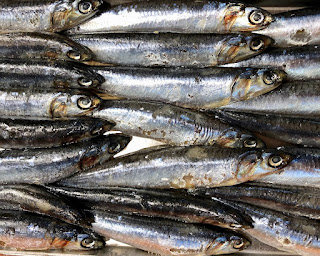
If you hear someone say "I love an anchovy," no context, do you assume they have have one particular anchovy that they love, or that they just love anchovies in general? And does this phrase sound normal to you, or unbearably young?

I'm not sure if it's the Baader-Meinhof effect, but lately the "I love a _" construction has been popping up everywhere in my life. I've even found it unbidden in my own speech, slipping from my lips to say "I love a weather report." My intuition tells me it's trendy, but it's always worth double-checking.

First, the construction itself - almost always in first person, more commonly the singular. A common example, "I love a red lip", means "I love red lips [for makeup]" or "I love a red lip [when I'm wearing makeup]." The difference between "I love red lips" and "I love a red lip" is subtle, but the latter one sounds more situational, like you like to use red lipstick often, while the former sounds like you're just a fan of red lips. I don't know if everyone feels this difference, but "I love red lips" feels like a stronger statement than "I love a red lip."

More broadly, the "I love a _" looks like a form of generic. Specifically, it's a construction about a kind of "general property" ("The Generic Book", Carlson, 1995). Compare:

  • John smokes a cigar after dinner.

This isn't about any one cigar, but about John's habit of smoking cigars. 'a cigar' is a stand-in for all the cigars John does smoke after dinner. It makes no further claims about cigars. It's common for generics in English to be singular nouns ("a cigar") or plural nouns ("John smokes cigars after dinner"). We can see a parallel in "I love a red lip" and "I love red lips."

Second, who's saying it? Anecdotally, mostly women, millenial-age or younger, and especially in the fashion and cooking worlds. I don't hear a lot of men using it, and if a man said something like "I love a mechanical keyboard," it would sound slightly feminine to me.

How old is it? It seems to date to around the mid-2000s. I've found it in 2007, in the book 'People':

"I love a red lip," says Heroes star Ali Larter, who often puckers up in the shade.

In 2009, a man who is definitely not a millenial assures a reader that anchovies are a great way to punch up a meal:

I love an anchovy. They lend a fabulous, penetrating richness to all sorts of dishes, from salads and pizzas to stews and roasts.

Twitter also has a fair amount of results for "I love a red lip" in 2009 and 2010, suggesting the construction was already common at the time. There are far more results now, but it's hard to know whether this is because the construction is more popular or more people are using Twitter: Twitter had 30 million monthly active users in the first quarter of 2010, 68 million in the first quarter of 2011, and 330 million by the first quarter of 2019 (via Statista).

The celebrity cook Alison Roman is a fan of this construction, using it frequently. She was born in 1985, making her the prototypical millenial woman who would use this construction.

You can't start with like, a dried soaked chickpea or bean. I love a canned chickpea, and I'm not afraid to say it.

Now why would a phrase like this appear if we already have a perfectly good generic in 'I love red lips' or 'I love anchovies'? I mentioned above that 'I love an anchovy' seems less intense and absolute than 'I love anchovies', so this gradation may have been a motivation for this innovation. There are other constructions that seem semantically similar to me, such as:

  • I love a (good) anchovy.
  • I love an anchovy (situation).

And as mentioned above, plural nouns and indefinite singular nouns are also used to represent a general property:

  • John smokes a cigar after dinner.
  • John smokes cigars after dinner.

It's not a big step to complete the parallel:

  • I love red lips.
  • I love a red lip.

There could also be an analogy with the following phrase, which is popular among millenial women and gay men.

  • We stan a [adj] queen.

So far, the construction seems pretty limited. As mentioned above, I almost always find it in the present tense first person. You could imagine forms like:

  • She loves a bold lip.
  • You know [that] he loves an anchovy.
  • I'm loving a kitten heel.

But it starts getting weird the more you deviate from it. These made-up sentences sound weird:

  • He loved an anchovy. (speaking of someone who's dead?)
  • Once I show you the proper technique, you will love a red lip.
  • I have loved an anchovy, but I'm over it/them now.

What's your experience with the millenial generic? Do you use this construction?

Works Cited

April 29, 2022

Blog Update

It's been another busy spring for my personal life, which means barely any time for my obligations, let alone the blog. I've made some progress on the Jekyll migration, but it won't be ready any time soon. I'll keep you all posted on the status of that.

In the meantime, I want to share a book I recently found out about: English Rock and Pop Performances: A Sociolinguistic Investigation of British and American Language Perceptions and Attitudes, by Lisa Jansen. Those of you who frequent the linguist blogosphere may know her from her blog, Lisa Loves Linguistics, where she writes about the sociolinguistic aspects of song. Her article on Rihanna's use of Jamaican Creole in the song "Work" was one of the inspirations for this blog. The book is about perceptions of British and American English in pop music, which I imagine would be of interest to readers of thiis blog. (I also happen to get a citation in the book! One of my very old articles on what I call 'HAPPY-breaking'. The newer version can be found here. I've seen my blog cited before, but it's very exciting to see 'Ace Linguist' in an actual physical book!)

I also read "The Japanese Language" by Haruhiko Kindaichi. It was originally published in the 50s, so I take the linguistic analyses with a grain of salt. But the interesting aspect of the book is that it was written by a Japanese linguist in Japanese for a Japanese audience. I read the book in translation, of course, but the intended audience is Japanese, not foreign. It is therefore an informative read about how Japanese authors, speech-givers, and everyday people view the Japanese language. One funny example was his comment on Japanese's Subject-Object-Verb form. In very long and complex sentences, such as in the Japanese constitution, someone reading a Japanese sentence must wait until the very end to find out if the verb is affirmative or negative. Most descriptions of Japanese I've read are from people learning it as a second language, so it is interesting to read about native speakers' attitudes towards their own language.

One of my time-consuming obligations will let up soon, and I hope to get back to finishing the migration and writing more articles! Maybe we can have 'Hot Linguistics Summer.' :)

- Karen

March 22, 2022

Happy 6th birthday, Ace Linguist!

Yes, Ace Linguist has been around for 6 years! I've never properly celebrated the website's birthday before, mostly because I'd never settled on a proper date, but I figured the anniversary of the first ever post was a good place to focus.

6 years ago, I was on the verge of graduating university and entirely unsure of I was going to do with my life. I still vaguely dreamt of going to grad school to study dialectology, but that wasn't guaranteed. Feeling the need to shore up my resume a little, I embarked on a project that I was sure wouldn't amount to much - a personal blog to write about linguistics.

When I first got into linguistics, I was inspired by the wide variety of blogs out there - places like Language Log, Language Hat, John Wells's phonetic blog, and All Things Linguistic, to name a few. Running a website was a dream I'd had since I was a little kid (and I'd tried to make it come true multiple times before), and combining it with language felt natural. Even though I was certain that blogs were on their way out in 2016, I started one anyway.

The blog had a rough start, with some unfocused articles about morphology in Zootopia and the semantics of 'beating a game.' But I realized pretty soon that I wanted to do something relating to an interest of mine - collecting the phonetic details of pop music.

Dialect Dissections were born at least partially out of a sense of frustration at how people talked about accents. We have the tools to talk about phonetic changes and hear examples easily: audio samples and the International Phonetic Alphabet. When people say things like "I think Taylor Swift used to have a Southern accent," why not try to figure out which Southern features she had? I took on the task, not sure if anyone else would be interested. I was pleasantly surprised at the possitive reception!

And so here we are today. My pace has slowed down since 2018 as my life has gotten much busier. My ambitions may outscale my schedule, but luckily I have time on my side. Here's to more years of Ace Linguist, and to more linguistics on the web!

- Karen