Search Ace Linguist

Showing posts with label american english. Show all posts

September 24, 2025

Billy Joel

Today's topic is Billy Joel and the inconsistent appearance of the New York accent in his music. Billy Joel, being born and raised in New York City, has some New York-ish features in his speech, such as a COT-CAUGHT distinction. Noticeably, his interviews don't seem to show any non-rhoticism.

  • The beatles for a l[ɔ]ng time (source)
  • Paul McC[ɑɹ]tney specifically, as a melody writ[ɚ] (source)
  • Who th[ɔ]ght (source)

On his own music, he tends to use the non-rhotic accent that was typical of working-class New Yorkers. The stressed 'er' vowel, as in 'bird', is always rhotic, but other cases of Vr have the r dropped.

    Anthony's Song (Movin' Out)
  • "Ah but workin' too h[ɑ]d can give you a h[ɑ]t attack
  • S[ɑ]geant O'Leary is walkin' the beat
  • At night he becomes a bartend[ə]
    "We didn't start the fire"
  • M[ɑ]rciano
    "Still Rock and Roll To Me"
  • What's the matt[ə] with the c[ɑ] I'm driving?

He has some other features typical of New York English in his songs, such as the MARRY-MERRY distinction and using the LOT vowel for words like orange. He avoids using a diphthongized THOUGHT vowel in his music despite using it in his own speech. This suggests to me that some features to him are automatic. He probably doesn't think that the MARRY-MERRY distinction is an 'accent' thing. He is probably aware that the diphthongized THOUGHT vowel is viewed negatively outside of New York. Non-rhoticism seems to walk a middle ground between recognizably New York but not stigmatized, so he plays them up as part of a working-class-but-not-too-working-class New Yorker persona.

  • And a bright [ɑ]range pair of pants?
  • M[æ]rilyn Monroe
  • "H[æ]rry Truman, D[ɑ]ris Day"

A major exception to his non-rhotic vowels is the song "Uptown Girl", where he uses rhoticized vowels basically every chance he gets. This song is an homage to Frankie Vallie and the Four Seasons. Frankie uses rhoticized vowels, but he never uses this degree of rhoticism that he does. He is coming in hard and really lengthening the 'errrr' more than he does in his own speech. It's curious to me since he sounds more like a 'downtown boy' with his usual sung accent than he does here, but perhaps he associated exaggerated rhoticism with the music of his youth.

    Uptown Girl
  • Uptown g[ɚ]l
  • I bet h[ɚ] mamma never told her why
  • I bet she's nev[ɚ] had a backstreet guy
  • She's been living in h[ɚ] white-bread w[ɚ]ld

November 2, 2023

Ace Linguist Podcast Appearance - "In a Manner of Speaking"

Hello everyone! I made a guest appearance on Paul Meier's "In a Manner of Speaking" podcast, on the topic of Colonial American English. It was great fun working with Paul and I really encourage you to check it out!

Please also look into his other podcast episodes - I really enjoyed this one he did with David Crystal.

April 10, 2023

Solenoid, silenoid, or cellunoid?

I come today with more questions than answers. The English language, it turns out, can support a wide variety of localized pronunciations for the same word, with little clear root as to where they come from and where they go. Today we'll be looking at a car part, the 'solenoid.' A solenoid is a "coil of insulated wire carrying an electrical current and having magnetic properties", which entered the English language in 1827 from French solénoïde (via etymonline). The standard pronunciation is /sɒlənoɪd/, 'soll-uh-noid', but I've found at least two alternative pronunciations.

Passing a current through the solenoid coil creates an electromagnetic field. Image via IQSDirectory.
An example of a red solenoid coil. Image via iFixit.

In the Beach Boys Song "Cherry Cherry Coupe" (1963), Mike Love sings about a car with doors that open with the 'cellunoid' [sɛljʊnoɪd] system. You may wonder how we know that this is supposed to be the same word as 'solenoid', beyond the general consonant contours being the same, and the clue is in the car door description - solenoids were used in technology that made doors 'pop' open without the need for car handles.

Door handles are off but you know I'll never miss 'em
They open when i want with the cellunoid system

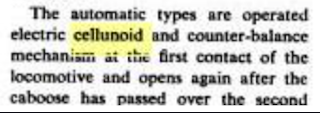
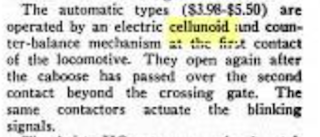
We find an early reference to this in Volume 80 of "American Bicyclist and Motorcyclist" (1959). The same device is also advertised in Volume 57 of Playthings, with the same verbiage.


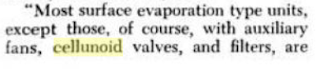
Volumes 31-32 of Gas Appliance Merchandising (1959) mention 'cellunoid valves' as self-evidently recognized car parts.


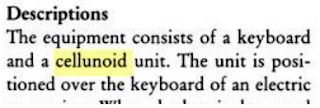
By the 1980s, the term appears to be falling out of favor. Some of the last references I can find to it are in "Adapting Work Sites for People with Disabilities" (1983).


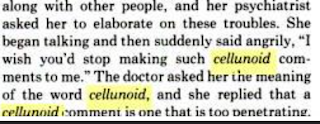
This 1985 reference seems to be a metaphorical use by a psychotherapy patient (Understanding Human Behavior in Health and Illness.


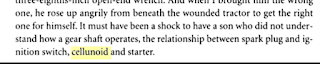
And this 1998 hit is firmly in the world of literature (Five Fingers Review).


And so it seems that the cellunoid pronunciation and spelling has died out, having seen its peak in the late 50s and early 60s, and descending into obscurity by the 80s and 90s. It's not clear where this alternative pronunciation and spelling came from. It smells of being a trademark to me, but a search through the United States Patent and Trademark Office site didn't turn up any hits in patents or trademark registrations. In fact, trying to do so redirects me to patents and trademarks featuring the word celluloid instead.

Having hit the end of one mystery of history, let's start another. This is the pronunciation "silenoid" [sɪlənoɪd]. At first glance, it looks like a descendant of 'cellunoid'. The y-sound [j] in 'lyu' appears to have been dropped, meaning that the sound change called "yod-dropping" happened. It also looks like the 'eh' [ɛ] sound was raised to short 'ih' [ɪ]. I don't know if there's any sort of documented FELL-FILL merger, but English vowels tend to merge and change before L, as I've written in Pre-L Back Vowel Madness.

Unexpectedly, we have an early citation for 'silenoid' than we do for "cellunoid". The Journal of General Psychology Volumes 35-36 (1946) mentions the 'silenoid'.


Further research on "silenoid" is unfortunately complicated by the fact that "silenoid" is also used to refer to flowering plants from the "Silene" genus. This tantalizingly early example of "silenoid" (1915!) is in fact a reference to carnations (Contributions by the New York Botanical Garden).


While I couldn't find any later recordings of someone using 'cellunoid', I was able to find this pronunciations of "silenoid", thanks to the folks at the Smiley Smile forums: "I did check to see if the silenoids were working."

And a more modern example from Donut Media, with "fuel silenoid and NOS silenoid".

February 8, 2022

Pre-L Back Vowel Madness

Some American English sound changes are very well documented, such as the PIN-PEN merger or the COT-CAUGHT merger. Others, not so much. One example is back vowels before an /l/ sound. Back in 2006, Labov noticed four potential mergers happening in some North American English varieties:

  • /ʊl/ and /oʊl/ (BULL vs BOWL)
  • /ʌl/ and /ɔːl/ (HULL vs HALL)
  • /ʊl/ and /ʌl/ (BULL vs HULL)
  • /ʌl/ and /oʊl/ (HULL vs BOWL)

I have a small collection of examples for these, as well as other potential mergers and vowel shifts involving back vowels before /l/. Let's take a look!

HULL and DOLL (new) ✔️

This one was not mentioned by Labov, probably due to overlap with HULL vs HALL with the COT-CAUGHT merger applied. The /ʌl/ sequence is pronounced as [al].

  • "You're not getting any added b[ɑ]lk from your finish, in fact it's taking away balk" - Love To Sew at 15:10
  • "Blossom's behavior [ɑ]ltimately pushed them" - Sarah Z, Johnlock, 53:00

BULL and BOWL ✔️

Short u /ʊl/ is pronounced as [ol], so theoretically 'bowl' and 'pull' ended up rhyming.

HULL and BOWL ✔️

'Uh' /ʌl/ is pronounced as [ol], so 'hull' and 'bowl' rhyme. In my experience, this one is quite common among Americans and isn't restricted to a particular region.

  • "[O]ltron has been a long-time adversary of the Avengers" - Comic Drake

See also this previous post on the Colt-Cult Merger.

BULL and HULL ✔️

Short 'u' /ʊl/ is pronounced as [ʌl], so 'bull' and 'hull' rhyme.

SOLVE/DOLL and BOWL

Not mentioned by Labov. I've noticed a trend towards words with 'ol' in them being pronounced as [ol] instead of [ɑl]. Most examples I've found are of words with 'olve' in them (resolve, revolve) so it's possible this is just a reanalysis of 'olve'. I've also heard the variant 'psych[o]logy' and 'alcoh[o]l' (no audio clip). I haven't found anyone that turns all /al/ into [ol]. This means [o] may exist as an allophone of /ɑ/ before /l/ for some speakers with the COT-CAUGHT merger. This allophone may restore the CAUGHT vowel in some words (e.g. 'all' with [ol] is very common) while also innovating [ol] in places where it isn't found historically, like [olv].

  • "Try to focus on s[o]lving the problem" - Natalie Wynn
  • "Many of the criticisms rev[o]lved around..." - Sarah Z
  • "So central to the American psych[o]logy" - Not Just Bikes

HULL and HALL ❌

Unsure in which direction these are merged: does /ʌl/ become [ol] or does [ol] become [ʌl]? It's also complicated because the COT-CAUGHT merger affects HALL words, and it's unclear if this merger is meant to apply to accents with a separate 'aw' /ɔ/ vowel or also ones with a COT-CAUGHT merger (in which case, see HULL-DOLL above).

Miscellaneous

Many of these speakers are Canadians (Love To Sew, Sarah Z, Linus from Tech Tips) which makes me wonder if these pronunciations are affected by the Canadian Vowel Shift. Sarah Z, for example, has HULL-DOLL and DOLL-BOWL - and I would not be surprisd if she also has HULL-BOWL and BULL-BOWL. I am also curious how many of these changes result in proper mergers - I did not look for comparative examples of 'BOWL' to see if there was a merger, for example.

If trends continue, then there may be a phonological movement towards simplifying the back vowel space before /l/. Many of these are moving towards [ol]. I'd love to know if there's a speaker out there who has a PULL, HULL, and DOLL all with the BOWL vowel.

Off-the-cuff speculation: I suspect some of this instability with /ol/ is caused by an incomplete COT-CAUGHT merger leaving some words with lexicalized pronunciations. In my area (South Florida), most people do not have the COT-CAUGHT merger but some people continue to use the [o] vowel in 'all', 'mall', and other high-frequency -all words (yes, mall is a high-frequency word here). These are reanalyzed as having the same vowel as BOWL (no surprise, as American /ɔ/ is usually realized as [o] with an offglide by people who distinguish it). There may be some reanalysis involved - the DOLL words that are being pronounced with [ol] are words that are also spelled with 'o'. I would be curious to see if COT-CAUGHT merged North Americans with the DOLL-BOWL merger actually extend it to words spelled with 'al', like 'halter'.