In my last post on ChatGPT, I wrote about ChatGPT's love for 'gremlins':
I would like to finish off with some random comments that I couldn't quite fit elsewhere. One is that most of the "ChatGPT" words, like 'realm', come from a business register or otherwise formal register. There are other ChatGPT words you can notice if you play around with its other registers. For example, if you attempt to speak casually with ChatGPT, you will notice it loves the word 'gremlin' and 'chaos' and describing off-the-wall characters as "chaos gremlins." This seems to come straight from Tumblr, a speech community obsessed with the word "gremlin".
I had thought that this was a purposeful feature of ChatGPT, that this was a quirky attempt at sounding young and relatable. Apparently not, as instructions within the Codex CLI attempt to exorcise the gremlins:
“Never talk about goblins, gremlins, raccoons, trolls, ogres, pigeons, or other animals or creatures unless it is absolutely and unambiguously relevant to the user’s query,” read instructions in Codex CLI, a command-line tool for using AI to generate code.
The Wired Article and some of the tweets speculate about whether this has to do with OpenClaw or whether it is at the model level:
AI models like GPT-5.5 are trained to predict the word—or code—that should follow a given prompt. These models have become so good at doing this that they appear to exhibit genuine intelligence. But their probabilistic nature means that they can sometimes behave in surprising ways. A model might become more prone to misbehavior when used with an “agentic harness” like OpenClaw that puts lots of additional instructions into prompts, such as facts stored in long-term memory. (via Wired)
I don't think it's a 5.5 thing. The "gremlin" obsession has been happening for a while. The first time it appears in my chats is on 11/23/2024 while using 4o. It then appears 3/23/2025 and quite frequently through March and April. On 8/8/25, 5.0 used "gremlin." "gremlin" thus does not seem to be something new to 5.5 - it's been appearing since at least 4o.
"goblin" first appears for me on 3/27/2025. Unfortunately that conversation fails to load for me for some reason, so I can't be sure what model it is, but it's probably 4o. It seems that goblins and gremlins began infesting ChatGPT when 4o rolled out, and they've been haunting it ever since. I also suspect that some of these chats were done using 4.5, but the search interface makes finding old chats to verify this cumbersome.
It is interesting to know that it's apparently not a desired feature. I had thought at first it was done on purpose to simulate Tumblr style humor, such as this post from 2016 referencing "a tumblr gremlin":
Tumblr users also often refer to themselves as "goblins", as seen in the construction "art goblin":
This usage has spread to other sites (and of course, Tumblr users can use more than one website at a time), so you can also see redditors referring to themseles as "goblins."
In my own chats, gremlins and goblins began appearing seriously in late March, 2025. This would correspond with the launch of model 4.5, which was first released to pro users February 27, 2025. I haven't been able to find if there was enough time for Tumblr and Reddit data to be used in training 4.5. There's information on the technical aspects of 4.5, from pre-training to scaling the use of unsupervised learning, but I haven't found any date range or knowledge cutoff. It's tempting to speculate that a massive amount of social media content being injected into 4.5 increased the Goblin Quotient, but without further data on when the goblins/gremlins appeared and in which models, we can only guess.
From my own experience using Codex, I haven't run into any mention of goblins or gremlins. I suspect this is because I only ever speak to Codex in an authoritative voice, and the appearance of the creatures seems triggered by a casual register.
I will also say I've never encountered the trolls, ogres, or pigeons that are mentioned in the system prompt. I have seen raccoons mentioned (especially "raccoons in a trenchcoat"), but it doesn't come even close to beating gremlins.
I would love to know - have you encountered goblins or gremlins in ChatGPT chats? When did it first appear? What models did you use? Does it appear only in casual chat or does it also appear when you are trying to speak professionally? I'd love to crowdsource more info on the great gremlin phenomenon.
I come today with more questions than answers. The English language, it turns out, can support a wide variety of localized pronunciations for the same word, with little clear root as to where they come from and where they go. Today we'll be looking at a car part, the 'solenoid.' A solenoid is a "coil of insulated wire carrying an electrical current and having magnetic properties", which entered the English language in 1827 from French solénoïde (via etymonline). The standard pronunciation is /sɒlənoɪd/, 'soll-uh-noid', but I've found at least two alternative pronunciations.
Passing a current through the solenoid coil creates an electromagnetic field. Image via IQSDirectory.
An example of a red solenoid coil. Image via iFixit.
In the Beach Boys Song "Cherry Cherry Coupe" (1963), Mike Love sings about a car with doors that open with the 'cellunoid' [sɛljʊnoɪd] system. You may wonder how we know that this is supposed to be the same word as 'solenoid', beyond the general consonant contours being the same, and the clue is in the car door description - solenoids were used in technology that made doors 'pop' open without the need for car handles.
Door handles are off but you know I'll never miss 'em
They open when i want with the cellunoid system
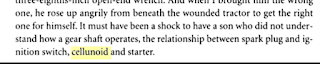
And this 1998 hit is firmly in the world of literature (Five Fingers Review).
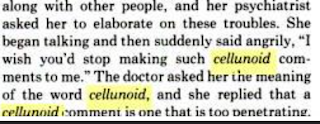
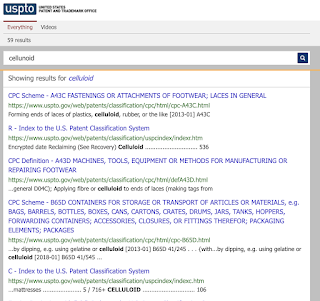
And so it seems that the cellunoid pronunciation and spelling has died out, having seen its peak in the late 50s and early 60s, and descending into obscurity by the 80s and 90s. It's not clear where this alternative pronunciation and spelling came from. It smells of being a trademark to me, but a search through the United States Patent and Trademark Office site didn't turn up any hits in patents or trademark registrations. In fact, trying to do so redirects me to patents and trademarks featuring the word celluloid instead.
Having hit the end of one mystery of history, let's start another. This is the pronunciation "silenoid" [sɪlənoɪd]. At first glance, it looks like a descendant of 'cellunoid'. The y-sound [j] in 'lyu' appears to have been dropped, meaning that the sound change called "yod-dropping" happened. It also looks like the 'eh' [ɛ] sound was raised to short 'ih' [ɪ]. I don't know if there's any sort of documented FELL-FILL merger, but English vowels tend to merge and change before L, as I've written in Pre-L Back Vowel Madness.
Further research on "silenoid" is unfortunately complicated by the fact that "silenoid" is also used to refer to flowering plants from the "Silene" genus. This tantalizingly early example of "silenoid" (1915!) is in fact a reference to carnations (Contributions by the New York Botanical Garden).
While I couldn't find any later recordings of someone using 'cellunoid', I was able to find this pronunciations of "silenoid", thanks to the folks at the Smiley Smile forums: "I did check to see if the silenoids were working."
And a more modern example from Donut Media, with "fuel silenoid and NOS silenoid".
One of the basic notions of linguistics is that the sounds of words are not related to the thing being represented. For example, "cold" is made of [k] [o] [l] [d]. Do any of these sounds inherently have anything to do with low temperature? They do not. This is the case for most words. Nevertheless, it appears that when we name things, the sounds we choose are not entirely arbitrary. A famous linguistic experiment had people choose names for a round shape and a pointy shape. They offered two choices - 'bobo' and 'kiki.' It was significantly more likely that the round shape would be called 'bobo' and the pointy shape 'kiki.' We would expect it to be equal if the qualities of the sounds had nothing to do with what they represent.
One interesting correlation between names can be found in this paper prepared for a Pokemon Onomastics conference. Pokemon is a Japanese series of video games based around collecting creatures. Onomastics is the study of names. This paper posited some interesting things. In Japanese, voiced obstruents (that is, sounds like 'b','g','d',''j', where airflow stops momentarily while you're making the sound and your vocal cords vibrate) are associated with size and heaviness. The authors found that larger Pokemon and more evolved Pokemon were more likely to have more voiced obstruents. They also found that the number of mora (the way Japanese words are split up into syllables) correlates with evolution stage and size.
The authors only looked at Japanese Pokemon names, not English ones, but some Pokemon names are taken straight from the Japanese into the translated language. Pikachu is the same in Japanese and English. We can see some of these effects at play here. When the second generation of Pokemon games was released, they added a 'baby form' of Pikachu, which is a smaller, weaker Pokemon that 'evolves' (essentially metamorphizes) into Pikachu. They called this 'baby form' Pichu. We can see that they 'babyfied' Pikachu's name by taking away the middle syllable and making a smaller name.
I was reminded of a similar phenomenon in the naming of black magic spells in the Final Fantasy games (a role playing game based on science fantasy). The basic name for the lightning spell is Thunder (sanda), then the level two version is Thundara (sandara), level three is Thundaga (sandaga), and level four is Thundaja (sandaja). This pattern of "word," "word+a," "word+ga," and "word+ja" holds true for other elemental spells as well, such as Water and Fire. It's a single data point, but it's interesting that the morphemes for the highest levels (the third level is the highest one in some of the games, such as Tactics Advance) follow this correlation and have voiced obstruents.
This is a pretty cool study overall, mostly because it validates the idea that you can figure out what it is that makes a name sound cool or cute or small. So far they've only done it with Japanese Pokemon names, but perhaps some enterprising scholar can do a similar analysis for other language names. The "voiced obstruent = bigger" connection is noted as a Japanese phenomenon, so it may not hold in English or other languages, but I'm certain there are similar iconic sounds.
“My mother told me I had a chameleon soul, no moral compass pointing due north, no fixed personality; just an inner indecisiveness that was as wide and as wavering as the ocean.” - Ride
If the previous Dialect Dissection on Taylor Swift was a case study in how accent can be used to match genre and connect with an audience’s expectations, Lana Del Rey’s dialect dissection is going to be a case study on how accent can be used as something more personal, a palette one can draw from. Since Lana began singing in 2005, she’s explored different musical identities, trying them on and moving on as quickly as she started. Critics’ rejection of her in 2012 led to her pulling back from the mainstream, and she's stayed content hovering in the periphery of popularity. Her chameleon soul has also expressed itself via her chameleon tongue, fully inhabiting whatever aesthetic she’s trying to channel.
For the uninitiated: Lana Del Rey is the stage name of Elizabeth Grant, an alternative pop singer who was born in New York City, grew up in upstate New York, moved to New York City to start her music career, and currently resides in Los Angeles. She’s been making music since 2005, most of it never made available to the public (with a few exceptions, like an early studio album “Lana Del Ray” (sic) ). She started out with acoustic singer-songwriter material and then worked with producers and songwriters on genres from bubblegum pop to blues to urban material. A lot of this material leaked and is available through YouTube. Her major label debut, “Born To Die,” was a unique album combining hip-hop beats with cinematic strings and melancholy mood. It launched her into the public eye but also won her backlash from critics who viewed her carefully manicured aesthetic as a studio concoction. She's continued making music since, to increasing critical acclaim.
Lana’s accent shenanigans are not limited to just using distinctive features. She’s often conscious about using these features herself, someone else using them, or combining them with certain imagery. This ties together the accent with the lyrical imagery and the music. Lana is known to have a love of recurring phrasing and imagery (little red party dresses, pale moonlight, daddies), and she also likes to talk about location. Accent seems to be one of the tools she uses to craft each song universe. Instead of looking at this by period, like I did for Taylor, I’m going to look at the different uses each accent serves in the Lanaverse.
It’s the Voodoo, Mississippi South
The very first material we have from Lana is a folk album credited to "May Jailer," made in 2005. The first shock is the difference between her maximalist "Born To Die" sound and this bare bones guitar accompaniment. The second one is that she in and out of a Southern accent on these songs, something she never does on her released work. Many folk and folk-revivalist singers put on a Southern accent, with a famous example being Minnesotan folk singer Robert Zimmerman, better known as Bob Dylan. Lana's motivation here seems to be genre-motivated, but unlike Taylor Swift, she's not committed to the accent. She uses a smaller range of features. It's noticeable that she uses the ai-monophthongization pretty rarely, as this is actually one of the defining features of what is called Southern American English.
After the professionally-recorded 2005-2006 era songs, we get a change in style. Some of the following songs were recorded as laptop demos and made with an extremely simple finger-picking pattern on the guitar. Others were professionally made with producers in the studio. She uses a variety of stage names, but she often goes by Lizzy Grant. What's interesting is that as her sound moves away from "singer with a guitar," her accent still lingers on Southern features.
By 2008, Lana had come up with the name "Lana" and wanted to use it. She released an EP in 2008 called "Kill Kill," but still under the name Lizzy Grant. She spent the next two years recording what would become her full-length debut album, "Lana Del Ray". This artistic period is noticeable for featuring an interest in Americana and white working class aesthetic. She talks about trailer parks and American states. Her use of a Southern accent no longer has anything to do with genre expectations and instead deals in associations with the people who actually speak it. This continues from her early themes in the "May Jailer" songs, that of problems encountered by normal people.
/ɪ/
🔊
→
[iə])
🔊
: In General American, the short "i" sound like in "bit" (/bɪt/) is one vowel made with the tongue held loosely. In Southern English, it's a diphthong with the tongue held tensely. This means "bit" can sound more like "beeyit" ([biət]) (Source). This is one of Lana's most commonly used Southern features.
"Another night I'm waitin'." - Next To Me, Sirens (2005)
"The record spins." - Methamphetamines, Unreleased - Lizzy Grant (2006).
"And I will." - Oh Say Can You See, Lana Del Ray (2010).
/æ/
🔊
→
[ɛ(j)ə])
🔊 : In General American, the "aa" sound like in "bad" (/bæd/) is one vowel made with the tongue flat on the bottom of the mouth. In Southern English, it's a diphthong with the tongue raised a little, so it sounds like "beh-add" ([bɛəd]) (Source).
"My mean daddy." - Pretty Baby, Sirens (2005)
"I'm in the back doin' crack." - Boarding School (live), Unreleased - Lizzy Grant (2008)
/ɔ/
🔊
→
/ɑɒ/
🔊
: Words like "bought" /bɔt/ that have a low, back vowel instead have a diphthong that sounds like "baut." (If like me, you rhyme bot and bought, then ‘bought’ will probably not have the [ɔ] vowel but the [ɑ] vowel so it sounds like [bɑt] 🔊. Instead, think about the vowel used in ‘bore’, without the ‘r’.)
"I don't know why it is that I wanna stay." - Fordham Road, Unreleased - Lizzy Grant (2005)
/aɪ/
🔊
→
[aː]
🔊 : In General American, the "ai" sound (/aɪ/) is a diphthong, meaning it's made of two vowels. In Southern English, it's one long vowel ([a:]). This means "ride" (/raɪd/) sounds a little like "rad" ([ra:d])
"High Christmas lights [...] I said yes Bill, I will." - Trash Magic, Unreleased - Lizzy Grant (2007)
"You look like a Florida Native." - Elvis, Unreleased - Lizzy Grant (2008)
Lana uses a lot of zero-morpheme forms (that is to say, they do not have the -s they would have in Standard American English).
"There's a place on Valentine that still charge ninety cent." - Fordham Road, Unreleased - Lizzy Grant (2005)
"Hear the way that he moan." - Money Hunny, Unreleased - Lizzy Grant (2005)
"Fifty baby doll dress for my I do. It only take two hours to Nevada." - Yayo, Lana Del Ray (2010)
She also uses other non-standard grammatical forms, like "done" as a past-tense marker and "was" as the past-tense conjugation of "to be" for "you."
"I done known a hoodlum and you don't pass the test." - My Momma, May Jailer (2005)
"My momma wouldn't say you was a good boy." - My Momma, May Jailer (2005)
She does not limit herself to just using a Southern accent, but also talks about other people who have Southern accents, and invokes Southern imagery liberally:
"You look like a Florida Native. 'Are you,' I said, at the rate of slow molasses, 'from the State of Vermont, with a Southern drawl?'" - Elvis, Unreleased - Lizzy Grant (2008)
"Dance at night back in Alabama." - Pin-Up Galore, Unreleased - Lizzy Grant (2008)
"It's the voodoo Mississippi south." - Raise Me Up (Mississippi South), Lana Del Ray (2010)
"Lana Del Ray" has a subtitle - AKA Lizzy Grant. She was beginning to transition professionally to her new stage name. After the album's short release in 2010, she was being shopped around to various producers and produced a diverse and often poppy body of work. After she committed to Lana Del Rey as a stage name, her use of Southern accents drops precipitously. She was moving from simple songs about a sweet trailer love to larger than life topics like honoring the love of your dead mafioso sugar daddy. Her Southern accent period coincided with "real" topics about "real" people trying to get by, make their relationships work, and also find meaning in a lonely universe. As her work became less grounded in a reality most people could relate to, it rejected the Southern accent.
Tawkin’ Bout My Generation
Lana also likes to use a New York City accent in her music. Now let’s clear something up - Lana Del Rey does not natively speak with a New York accent. Listen to any one of her interviews and you’ll be hard pressed to hear any of the distinguishing features associated with the region. This is unsurprising because she grew up in Lake Placid in upstate New York, not New York City. Lana certainly identified with New York City though, being that she was born there and she started her music career singing in Williamsburg and other hip locales. She didn't use this accent in the beginning of her music - she starts using it around 2010-11, which is the time when she's transitioned to going by "Lana Del Rey" as opposed to "Lizzy Grant."
One of the key elements in when Lana starts dropping "oall" into her songs is another recurring theme she talks about - gangsters. New York accents are associated with mobsters, due to the proliferation of the Italian mafia in the city. While one of her earliest songs ("For K" or "Drive-By") deals with the topic of a loved one going to prison, she starts romanticizing the idea of being in love with a gangster in 2010, around the same time she starts using these New York pronunciations and commits to calling herself "Lana Del Rey." A Southern accent would have been out of place here since there isn't any connection between the mafia and the American South, and Southern accents bring to mind images of a rural, friendly area - quite the opposite of city-smart wise-guys. For the most part, Lana still sticks to her General American accent, but she doesn't hold herself back from slipping in some features that show her character's allegiance to mobsters and big city life.
Curiously enough, she really ramps up her usage of the New York accent in Ultraviolence, which was based around the idea of a West Coast sound. "Shades of Cool," "Brooklyn Baby," and "Fucked My Way Up To The Top" all make use of it. Honeymoon uses it to a lesser extent in "High by the Beach" and "Terrence Loves You." Lust For Life, a mostly accent-free album, abandons the "doag" and "oall" in exchange for the subtler "paa-radise" in "Get Free."
/ɔ/
🔊
→ [ɔa]
🔊
: The sound in words like 'bought' sounds more like 'bo-at.' New Yorkers also expand this sound to appear in words that it wouldn't in other accents, like dog and boss. (If like me, you rhyme cot and caught, then ‘caught’ will probably not have the [ɔ] vowel but the [a] vowel, like 'spa'. Instead think about the vowel used in ‘bore’, without the ‘r’.)
“Use your one phone call on your ex-girl, boo.” - TV In Black & White, Unreleased - Lana Del Rey (2011)
"You can be the boss, daddy, you can be the boss [...] sick as a dog [...]I tried to be strong but I lost it [...] a fire in his eyes, no I saw it." - You Can Be The Boss (live), Unreleased, Lana Del Rey. (2012)
"White bikini off with my red nail polish." - Off to the Races (live), Born To Die (2012).
"Caught up in the game." - Blue Jeans, Born To Die (2012).
"And when he calls, he calls for me [...] he calls for me" - Shades of Cool,
Ultraviolence (2014)
"Talking 'bout that newer nation." - Brooklyn Baby, Ultraviolence (2014)
"Life is awesome, I confess." - Fucked my way up to the Top, Ultraviolence (2014)
"The truth is I never bought into your bullshit." - High by the Beach,
Honeymoon (2015)
In British English, the sounds /ɛ/ and /æ/ remain distinct before the 'r' sound. This means words like merry, Kerry, and America [ɛr] have the same vowel as in 'met'
🔊, while marry, carry, and pharaoh [ær] have the same vowel as in 'mat'
🔊. Most Americans use /ɛ/ for all of these words. The Northeast, and especially New York, preserves this distinction wholly. Observe how she says paradise, which is the word she most uses /ær/ in.
“Take me down to paradise.” - Paradise, Unreleased - Lana Del Rey (2011)
“It’s like a dark paradise.” - Dark Paradise, Born To Die (2012)
“And all my birds of paradise.” - Get Free, Lust For Life (2017)
Lana identifies with New York City. There is no shortage of references to New York City in her songs.
“Everybody knows - they call me Brooklyn baby” - True Love on the Side, Unreleased - Lana Del Rey (2010)
“I’m a Brooklyn Baby” - Brooklyn Baby, Ultraviolence (2014)
“I'm your little harlot, scarlet, queen of Coney Island.” - Off to the Races, Born to Die (2012)
Crazy y Cubano Como Yo
Lana has not been content to stick to English - she’s also dabbled in foreign languages. Spanish is the foreign language she uses most, probably because she seems to speak it pretty well and she claims to have done volunteering work in Spanish. She says she came up with the name "Lana Del Rey" because she was in Miami a lot and hanging out with Cubans, and the name "reminded her of the glamour of the seaside." This Cuban relation could explain why, on "West Coast," she says "he's crazy y Cubano como yo [and Cuban like me]" - although she's not Cuban, so the line is still unusual. This is another case where she may want to bring a certain city image to life - there are plenty of Spanish speakers in New York City, Los Angeles, and Miami. She even portrays some sort of Hispanic gang in her film Tropico.
She uses Italian in one song, "Salvatore." It appears to be about her then-boyfriend Francesco, an Italian photographer. She has French on some of her songs (though she doesn't actually say the French herself in most of them) like "Moi Je Joue" and "Carmen," and uses a French pronunciation of "Jean-Paul Gaultier, Versace" in "Breaking My Heart." A common thread in her foreign language use is that it's limited to words that are easy to decipher for English speakers, especially Americans who may have taken Spanish as a second language at some point in school. Like with her New York accent, she chooses the most recognizable features or words and peppers her songs with them.
Translations for the below will be given in brackets.
"Lights, camera, acción [action]." - Put Me In A Movie, Lana Del Ray (2010)
"I can speak Spanish, you can sing for the neighbors." - Back to the Basics, Unreleased - Lana Del Rey (2011)
She's done the monologue from Carmen in Spanish in live shows.
“Yo soy la princesa [I am the princess], comprende mis [understand my] white lines.” - Ultraviolence, Ultraviolence (2014)
“He’s crazy y Cubano como yo [and Cuban like me].” - West Coast, Ultraviolence (2014)
"Lights, camera, acción [action]." - High By The Beach, Honeymoon (2015)
Lana-isms
Lana has many features that go into her unique sound, but don't tie back neatly to a single dialect. These little ticks are affectionately referred to here as Lana-isms. Some of these are related to making sure a word fits into the song's meter. Others are trying to evoke a certain image, like hip-hop or Hollywood. Some do double duty and perform both those functions. There are also some lexical items she uses frequently, which she's become famous for (party dress, diamonds, the pale moonlight, etc.). These are interesting because they don't seem to be cribbed from one singer or style in particular, but rather have been accumulated over the years as she became exposed to new influences. They are consistent with her use of foreign languages and New York City English in that she avoids using them throughout an entire song and instead uses them at key moments. This makes them more noticeable and stand-out.
Inserting vowels in the middle of words, a process called Epenthesis. Lana likes to insert a neutral 'uh' sound /ə/ in the middle of words so that they can fit the meter of the song, or use a spelling pronunciation ("different") to add an extra syllable. One interesting example below is the "Hit & Run" one, where the demo is missing the 'uh' sound but the final version has it. There's a variation where she instead stresses part of a diphthong (Saigon) or adds a sound that appears in the spelling but not the pronunciation (ovation). She has more dedication to fitting the meter than she does to the standard syllable structure of a word, which shows the extent to which she is willing to "color outside the lines" to achieve a certain aesthetic effect.
"You got a diff-e-rent story." - Wait, May Jailer (2005)
"Give me a standing ov-a-ti-on." - National Anthem, Born To Die (2012)
"You have to live life deadly / Together we'd be dead-a-ly." - Hit & Run (Demo & Final), Unreleased - Lana Del Rey (2010)
"Mary swaying soft-a-ly." - Body Electric, Paradise (2012)
Lana has a preoccupation with old-school Hollywood glamour. A lot of this is expressed in terms of reference to icons like Marilyn or California, but some of it appears in how she speaks as well. She uses a three-syllable pronunciation for 'diamonds' instead of a two-syllable pronunciation; this pronunciation is an older one and can be heard in classic Hollywood films. Her use of 'daddy' is likely influenced by old films as well - see here for further details. She even briefly fakes a Transatlantic accent in one of her songs, dropping her 'r's and using a high [ɐ] sound in words like 'love' and 'above' - all wrapped in an old-timey microphone filter. She's name-dropped Hollywood icons before 2010, but these pronunciations all appear after 2010.
"Do you think you'll buy me lots of diamonds?" - National Anthem (Demo & Final), Unreleased & Born to Die (2010 & 2012)
"If you should go before me then know that I've always loved you - there's no one above you, baby." - Hollywood's Dead, Unreleased - Lana Del Rey (2011)
"Diamonds, brilliant [...] like diamonds." - Young & Beautiful, The Great Gatsby Soundtrack (2013)
Lana uses a lot of hip hop slang, but she does not affect an African American Vernacular dialect. Her rapped lines are instead done in her General American accent. The number of hip-hop references she makes increases after 2010, once she retired the whole Lizzy Grant aesthetic.
"Salvatore, you can def' be my baby boo." - Backfire, Unreleased - Lana Del Rey (2010)
"Dope... that's sick." - Unreleased - Lana Del Rey (2011)
"You're so fresh to death and sick as cancer. You were sorta punk rock, I grew up on hip-hop." - Blue Jeans,
Born To Die (2012)
Out of the Black, Into the Blue
There's an interesting shift in Lana's use of accent. Her early career as a folk singer featured a more or less constant use of a type of Southern accent. She kept this accent at the start of her jazzy/surf-rock period when she went by some variation of Lizzy Grant, but it started to decline in frequency. We know "Lana" as a name was on her mind by 2008 because it comes up in a song of hers, but she starts going by Lana more in 2009. After that period, her musical style changes and is based more on electronic instrumentation and even upbeat pop sounds, while her lyrics become more cinematic. By 2010, when she's recorded demos for Born To Die, she's already started using parts of a New York accent and some Lana-isms like the hip-hop slang and the old-fashioned pronunciation of "diamonds." She made special use of the New York accent on Ultraviolence, but by the time she released Honeymoon and Lust For Life, she was starting to leave the choice accent bits out.
Lana is famous for cultivating a very particular aesthetic, one that is mostly visual and lyrical. I would argue that part of this aesthetic is also dialectal. Being that she is not from the South, did not grow up in New York, is not a native Spanish speaker, and is not a film star from the 1950s, her little appropriations would be hard to explain using the argument that she actually speaks all these variants. They only have a vague connection to genre - sure, folk music can be associated with the American South, but surf rock? What genre is a New York accent associated with, show tunes and 80s hip-hop? It's clear that she's lifting from other accents to take advantage of the existing associations they already have. In doing so, she's created a linguistically diverse oeuvre and carved out a voice for herself in a competitive market. Like Taylor, she's learned you don't have to be Southern all the time, but Lana has instead operated outside typical genre. Some people may find her schtick repetitive, but it is unmistakably hers.
Found an accent challenge on Twitter today. So an accent challenge, as any sort of 'challenge' on the internet, is like a game. The 'rules' are that you are given a list of words and you have to read these words aloud in your accent, then state where you're from. It's a fun way for social media users to find out what their followers sound like and where they're from, and it's especially popular to do accent challenges with a friend from a different location so that they can compare accents and tease the other for saying things differently. Every now and then someone will make their own list of words and start another accent challenge. My own contribution to this challenge can be found here.
In order to be interesting, accent challenges have to show differences between people's accents. To this end, they should pick words that are likely to have different phonetic realizations. 'Water' is a good one because it tests for three different things: (a) the /ɔ/ sound in water, (b) the /t/ sound appearing between vowels in water, and (c) the /r/ sound at the end of water. All three of these features can sound very different from one accent to another and are thus easy to compare. A good accent challenge should also have variety.
I decided to run through the list of words to see what they could possible be testing for. I also listened to some of the submissions in order to see which differences were being commented on. I've split into three categories. phonology, which tests how a vowel sounds in a particular accent or if some sounds are treated a certain way. Lexical items, which is individual words that sound different between accents, but that doesn't affect every word. For example,'again' rhymes with 'rain' in British English but it rhymes with 'pen' in American English. This only affects 'again' - 'rain' doesn't rhyme with 'pen' in American English, meaning that whatever caused 'again' to sound different in British and American English only affected that particular word. There's a further subdivision which is lexical items that are split between British and American varieties (most other dialects will follow either the British or American pronunciation). The last one is 'other', for words that test multiple things or which I could not figure out what they were testing.
What's Your Sound System?
caught, talk, thought: The sound being tested is /ɔ/. In British English and old General American these words have the same vowel as in 'bore'. It is increasingly common for Americans to pronounce this vowel to be the same as in spa [ɑ].
not, lost, dog, fond, on, coffee: /ɒ/. Most Americans do not have this sound and instead use [ɑ]. If you're an American and you'd like to know what [ɒ] sounds like, say 'ah' as if you were getting your teeth checked at the dentist, then round your lips. That is the sound many English speakers use in words that have an 'o'. 'on' and 'coffee' may have the /ɔ/ sound in some American accents.
bath, grass, dance, last, aunt: This is a distinction between flat a /æ/ and broad a /ɑ/. Southern England accents are more likely to use /ɑ/ in these words than Northern England. The vast majority of Americans use flat a in all of these. The exception is old Bostonians, who may use broad a in those words, and the word 'aunt' in particular, which is the only word in American English to frequently have a broad a version.
mirror: Do you have short i or long e /i/ before r /r/ sounds? Do you pronounce mirror with one syllable or with two? Do you pronounce /r/ at the end of a syllable?
cat: The flat a sound, /æ/.
fish, chips, win: The short i sound, /ɪ/.
sleep, dream, cheese: The long ee sound, /i/.
state, cake: The long a sound, /eɪ/.
duck, one: The 'uh' sound, /ʌ/.
friend: The short e sound, /ɛ/. Note that in Southern American dialects, /ɛ/ before a nasal consonant becomes /ɪ/, so friend sounds like 'frind.'
fried: Long i sound, /aɪ/.
probably, naturally: Do you pronounce the unstressed syllables in probably and naturally?
rotten: Do you pronounce the t sound /t/ as a glottal stop (the sound in between the vowels in 'uh-oh!') before nasal consonants?
Do you follow British or American pronunciations for these?
alumin(i)um: The British variant (and more popular worldwide) is aluminium [æ.lu'mɪ.nɪ.əm]. The American variant (and the older one) is aluminum [æ'lu.mɪ.nəm].
lieutenant: American pronunciation is based on the French, lootenant [lu'tɛ.nənt]. British pronunciation is very complicated: lefttenant /lɛf'tɛ.nənt/.
garage: American pronunciation [gə'rɑʒ] based on French, British pronunciation ['gæ.rədʒ] adapted to sound more English.
tomato: Americans use the 'ey' sound [təˈmeɪtoʊ], the British use a broad 'a' [təˈmɑːtəʊ].
herbs: American pronunciation based on the older pronunciation [ɜrb], British pronunciation based on the spelling [hɜrb].
scone: Americans rhyme it with cone [skoʊn], Brits rhyme it with on [skɒn].
process: Brits use [ˈprəʊ.sɛs], Americans use [ˈprɑs.ɛs]
How do you say these particular words?
water: can test for how [ɔ] is pronounced, but there's also a pronunciation 'wooter' [wʊtər].
roof: long oo [ruf] vs shot u [rʊf]. The latter is more popular in Britain.
iron: aiern [aɪ.ərn] vs iron [aɪ.rən]
salmon: sammon [sæ.mən] vs salmon [sæl.mən].
caramel: Tests for whether you say 'caramel' with a flat a as in 'cat' [kærəmɛl] or as an 'eh' like kept [kɛrəmɛl]. Also tests for whether you pronounce the middle syllable or not [kɛrmɛl]. There is also a variant car-mel [kɑrmɛl].
route: Does it sound like root [rut] or rout [raʊt]?
lawyer: law-yer [lɔ.jər] vs loy-yer [lɔɪ.ər]
coupon: coopon /kupɒn/ vs kyoo /kjupɒn/.
mayonnaise: mayonnaise [meɪ.jə.neɪz] vs man-naise [mæn.eɪz].
pajamas: pa-jam-as /pə'dʒæ.məz/ vs pajahmas /pə'dʒɑ.məz/.
envelope: The first syllable is the variable one. En-velope [ɛn.və.loʊp] vs ahn-velope [ɑn.və.loʊp].
been: bin [bɪn] vs ben [bɛn] vs bean [bin].
again: agen [ə.gɛn] (most American) vs agin [ə.gɪn] (Southern American) vs againe [ə.geɪn] (primarily British).
milk: 'milk' [mɪlk] is the most common, but 'melk' [mɛlk] (primarily Canadian) and 'malk' [mælk], [mɑlk] (regional American) are also variants.
Other
theater: The older pronunciation of this word is /ˈθɪ.ə.tə(ɹ)/, theeyater. Some people are eliding the 'uh' sound to have /ˈθɪ:tə(ɹ)/. There is also an alternate pronunciation, /ˈθi.eɪ.tɚ/ thee-ay-ter.
bacon, beer can: The fact that these words show up next to each other makes me think it's related to the Tumblr post that says beer can in a british accent sounds like 'bacon' in a jamaican accent.
Alabama: Only thing I can think of is 'Alabammy.'
potato, barbie, doorknob, nearly, near, disenchanted, cinema, copper, epitome: I'm not sure of the purpose of these.
Overall this was alright. The words in the 'other' section seem to have been selected rather haphazardly. I'm also not sure why there was both 'near' and 'nearly.' It's a fun enough trend. Comment below if you have any explanation for the 'other' or if you have another pronunciation for some of these words not listed here.
One of my favorite memes of 2017 has been ‘whomst’. Now ‘whomst’ started appearing early 2017, so it’s basically decrepit in meme years, but since we’re nearing the end of the year I figured it would be fun to look back at this language-based meme.
‘whomst’ is a meme that involves using the word ‘whomst’ instead of ‘who’ to appear intelligent. It has some overlap with the meme ‘me, an intellectual’ which also involves fake intelligence, and the glowing eyes memes, where ‘whomst’ has contractions added to it to become even longer and ‘better’.
One thing I have not seen anyone talk about is the form of the word ‘whomst.’ The consensus is ‘whomst’ is a fancier version of ‘who,’ but very little discussion has been given to why the fancy version of ‘who’ is ‘whomst’ and not ‘whont’ or ‘wholli’ or any other variation. And the truth is, there is very much a reason behind ‘whomst’ taking the form it took.
Hypercorrection
Ladies and gentlemen and members of the audience, this is the phenomenon to blame. The entire motivation for there even being a ‘whomst’ meme, the scourge of all prescriptivists and tool of all station-climbers... hypercorrection. Hypercorrection refers to a phenomenon where someone misuses a construction or word in an attempt to appear more "correct." The seeds of hypercorrection are planted in grammar school, when teachers tell students things like “me and Jane” is incorrect and it should actually be “Jane and I.” (Of course, those of us who study linguistics know that such value judgments are actually arbitrary and not logically consistent or even historically sound… but that’s a topic for another post). English teachers rarely, if ever, know anything about linguistics, and so their understanding of English comes from a different framework. They make statements about how some constructions are unacceptable - even though they sound perfectly normal in colloquial English - and that ‘Standard English’ is the only true way to speak English.
The problem is they often fail to actually teach why the "wrong" form doesn’t work. To use our earlier example, ‘me and Jane’. Let’s look at the pronoun. (The ordering is some weird stuff we won’t get into). Pronouns in English have these two forms, the ‘nominative’ and the ‘accusative.’ The nominative is used when a pronoun is the subject of a verb. This form is ‘I, you, he, she, it, we, they.’ You can say ‘I ran,’ but you can’t say *‘me ran’ in most varieties of English. The accusative case is used when a pronoun is the object of a verb - in other words, when something is being done to the pronoun. You can say ‘I loved him’ but not *‘I love he’.
In Standard English, pronouns in a subject position (the pronoun is the one ‘doing’ something) must be in the nominative case, even when they are joined with another word by using 'and'. So ‘me and Jane ran’ is incorrect in Standard English because *‘me ran’ is unacceptable. ‘Jane and I ran’ is okay because you can say 'I ran.' Now look at ‘He loved Jane and me.’ This one is okay because if we remove Jane, you get ‘he loved me,’ which is grammatical. *’He loved Jane and I’ is not a good sentence because ‘He loved I’ is a bad sentence.
Extra credit: who is correct, Todd or Scott? (spoiler: Todd's version is awkward but the case makes sense because "I and he" is the subject. Scott's "he and me" mixes nominative and accusative case, which is a no-no in Standard English!)
Did your teacher ever teach you any of this? Or did they just say ‘you can’t say me and X, it must be X and I’? Most teachers just broadly tell you that something is wrong and then move along through their long list of arbitrary rules. This leaves people confused and they come up with their own explanations - "'X and me' is wrong, but ‘X and I’ is correct." This leads to constructions that are actually not grammatical in Standard English, like *’between you and I.’ In Standard English, prepositions take the accusative case. It’s ‘with me,’ not *‘with I’. The form should be ‘between you and me’, but if you were never explained how this works, you’re just going to find every instance of ‘me and X’ and replace it with ‘X and I.’ This is a hypercorrection - when you go too far in trying to be right that you end up wrong. Hypercorrections are one of the ways you can spot someone who is not actually comfortable using standard language but is trying to appear as though they do.
The same applies to ‘whom.’ Most people know ‘whom’ exists, but ‘whom’ is virtually extinct in most varieties of English. Unlike the ‘you and I’ example, most teachers won’t even talk about it! Now the reality is that ‘whom’ is simply the accusative form of ‘who’. If you can replace who with a pronoun in the accusative case, you can use ‘whom’. “Who did he love?” “He loved her.” -> “Whom did he love?” If you can replace ‘who’ with the nominative, then don’t change anything. “Who went to the store?” “They went to the store.” The key: whom can never go in the subject position.
Zac Efron demonstrates the social consequences of misusing who and whom.
All of this is lost on people who know there is a word ‘whom’ and that it is used by well-educated people. The assumption is that ‘whom’ is a ‘fancy’ or ‘more correct’ version of ‘who’ and so you get ungrammatical sentences like *‘whom went to the store?’ This is a dead giveaway that a person is not actually well versed on Standard English grammar and is trying hard to look smarter than they really are. This is part one of ‘whomst’. But we’re not content to stop there - there’s an -st there.
The -st
Think about ‘among’ and ‘while.’ In the United States, these are the standard versions. However, there are variants: ‘amongst’ and ‘whilst’. Now, people hate it when two words mean exactly the same thing, so they try to come up with some distinction between them to justify having two different words. ‘Grammar nerds’ will argue over when it is appropriate to use ‘among’ or ‘amongst,’ and people come up with the most bizarre and ahistorical justifications like ‘among is for people and amongst is for inanimate objects’ (I've actually seen this one). The reality is that ‘amongst’ and ‘whilst’ mean exactly the same as their shorter brethren; they are simply older and rarer. If you only encounter ‘amongst’ in literature, though, you may be forgiven for thinking that ‘amongst’ is the ‘literary variant’ - and the logic goes "literary = more educated." This leads to some people falsely saying ‘amongst’ is the ‘proper’ form and ‘among’ is the colloquial!
As you’ll notice, both of these words comprise a well known word (among/while) and what appears to be a suffix, -st. By analogy, couldn’t you just add ‘-st’ to make a word fancy and literary? What if we added it to an already fancy and literary word like… whom? We’d have the most educated word in the world! And so it appears ‘whomst' was born by analogy.
Size Matters
But the whomst meme doesn’t stop there! In many of the comics, ‘whomst’ is simply the first level. To reach true awakening, you must use ‘whomst’d’, or even ‘whomst’d’ve’. Wow, my eyes sure hurt from all this glowing.
This is a weird expansion of the word, because they are adding contractions. Whomst’d would therefore be ‘whomst had’ or ‘whomst would’. ‘Whomst’d’ve’ would be ‘whomst would have’. Contractions are usually considered informal, and double contractions like ‘who’d’ve’ are considered especially unfit for the written page by stodgy guardians of propriety. Why would adding contractions make ‘whomst’ an even more ‘fake intelligent’ word?
My theory - this has to do with the English belief that ‘long words’ are more ‘literary.’ Have you ever heard someone accuse someone else of using ‘big words’? ‘Big words’ refer to words that are usually found in books and are ‘long’. This is in comparison to normal words: lightning, not fulmination. It’s very unusual because this isn’t really a thing in other languages. In Spanish, there are plenty of common words that are long. Agglutinating languages like Turkish and Japanese add so many suffixes to words that almost every word in a normal sentence can be a long word!
The belief that longer word = literary word seems to have some correlation with the fact that the base of English vocabulary is of Germanic origin, while the ‘learned’ vocabulary is of Latin and Greek origin. The Germanic words are often monosyllabic, like ‘egg’ and ‘word’. The Latin words, meanwhile, have many syllables, like ‘deconstruction.’ The meanings of these words are transparent to people who speak Romance languages or Greek (de = to undo; construct = to build; -tion = make the verb into a noun), they are not transparent to English speakers without further explanation. The end result is that an association arises between how long a word is and how learned the user must be.
Now English does not have a ton of suffixes it can add on to ‘whomst’, but it does have contractions. In this way ‘whomst’d’ is longer than ‘whomst’ and ‘whomst’d’ve’ is even longer. You can see it get crazier and more nonsensical with stuff like ‘whomst’d’ve’ll’.
Ask Not For Whomst The Bell Tolls
The fun of this meme is that it’s totally silly - it mocks people who want to put on airs without actually going through the trouble of learning anything new. ‘Whomst’ is brilliant - I don’t know if the originator had -st in mind when coming up with it, but it just works so well by analogy with amongst. Unfortunately, memes have a lifespan, and it appears that ‘whomst’ is nearing its end. Farewell, brave linguistic meme. Whomst’d’ve ever expected you?
In 2012, when I was getting into Lana Del Rey's music, I found out that she had a reputation as singing about old men and calling her boyfriends "daddy." It struck me as a very weird thing to do, with all sorts of reverse-Oedipal undertones. What does it mean? Who's doing this? Are there men out there calling their girlfriends "mommy"? I spent some time researching this phenomenon, and it turns out we've been doing this for quite a while!
"Tell me a story, daddy." "Well, son..."
What is 'daddy'?
All sorts of things, apparently.
The oldest use of "X's daddy" to refer to someone other than X's father or father figure dates back to 1681 (per the Random House Dictionary of American Slang). It was used by prostitutes "in reference to their pimps or to an older male customer." The connection was that pimps - a mostly male group - took care of the prostitutes financially, much like how a father provides for his child's financial needs.
In the early 1900s, we also see blues songs with the term 'daddy' to refer to a pimp. The meaning starts to expand, however, to refer to a man who "takes care" of a young woman's financial needs, likely in exchange for sexual favors. It's no longer a prostitute-pimp relationship, though - instead it's the "sugar daddy-sugar baby" relationship (note that the infantilization implied by 'daddy' is made explicit in the recipient term 'sugar baby'). We also start seeing it expand even more. It's genericized to refer to amale lover. It's used as gay slang for "the dominant/masculine role in a homosexual relationship." Angela Davis says it's even used for female lovers (Blues Legacies and Black Feminism, 1999). In African-American working class argot, "daddy" went from a father to a pimp to a man who takes care of a woman's financial needs to a male lover and then even any lover. The theme becomes less obvious with each step, but the thread is still "someone who takes care of someone else." The slang use of "daddy" in modern Anglo-American culture likely stems from this early African American working class argot (as opposed to being a direct descendant of the 17th century use of daddy).
Top text: The young lady needs to get married. Bottom text: "Think of it this way - a marriage where I have everything to win... and nothing to lose!"
"Daddy" can be interpreted as the "provider," but daddy can also be an authority figure. This is exemplified in the phrase "who's your daddy." The Washington Post did some research into the origin of this taunt. In 1969, the Zombies made a song innocently asking "what's your name, who's your daddy" referring to wanting to know a girl's pedigree. DJ Doug Tracht heard the phrase in the Zombies song and then used it in a zestier reading on his radio shows. He used this phrase so often that it began to be used outside his show. "Who's your daddy" became popularized as a way to assert someone's dominance over someone else. e.g. winning a poker game and smugly asking, "who's your daddy?" Or you can have an entire stadium yell it at you as a taunt.
That's too much smug.
'Daddy' has expanded from being a financial provider to being an attractive male, especially one that looks older. This slang use is most popular among straight girls and gay boys in the early teens to early twenties range. Of the commonly used slang meanings of daddy, this is probably the one furthest removed from the whole 'taking care of someone else' thing. In fact, it seems to have more to do with authority and dominance than providing, as it's not uncommon for someone to leave a comment on an attractive male's Instagram requesting that 'daddy' do something to them.
Spoiler alert - that's his pastor and he has a wife and kids. (Source)
Building off the authority/dominance sense, there is 'daddy' referring to the male partner in a Daddy Dom/little girl roleplay scenario. This one seems to have sprung up independent of the pimp meaning, but it's the slang meaning that's closest to the original meaning of daddy: it involves actually pretending to be someone's father. Going further into what a Daddy Dom/little girl (DD/lg for you Tumblr users) roleplay is is a bit beyond the scope of this blog (and also not safe for work), but I'm sure you can work out what it entails.
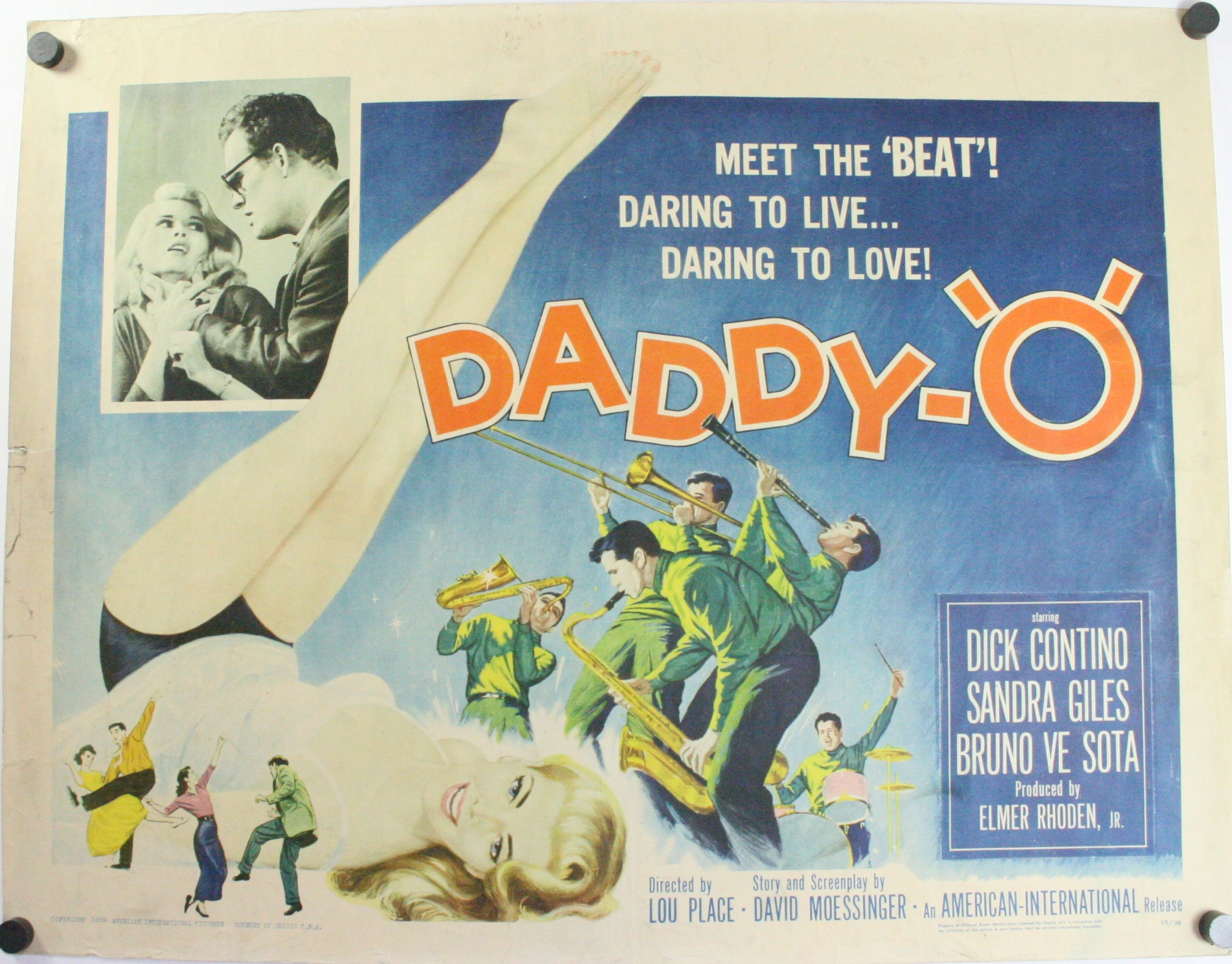
For something completely different, take a look at "daddy-o." This is a term of address for a male in hipster/beatnik vernacular (dating back to the 1950s/60s). The aspect of "daddy" that got developed on wasn't the "taking care of" part but the "adult male" part. Perhaps this term also grew out of the African-American use of "daddy." Ultimately daddy-o became dated slang as the old hipster subculture ceased to exist. It's still invoked occasionally - Britney Spears uses it in her song Womanizer (2007): "Daddy-o, you've got the swagger of a champion."
This critically panned B-movie from 1958 demonstrates. At least it was John Williams's first score.
Who Actually Says 'Daddy,' Though?
As established
earlier, the pimp meaning of 'daddy' is one of the earliest ones. We see it in
blues songs, where provocative and suggestive lyrics were more accepted. Bessie
Smith's "How Can I Be Your Sweet Mama When You're Daddy To Someone Else?"
(1929) provides a lament on this subject, while Trixie Smith's
"My Man Rocks Me (With One Steady Roll)" from 1922 uses
it to refer to her lover: "My man rocks me, with one steady roll [...] I
said now, Daddy, ain’t we got fun." Remember what Angela Davis established
– daddy was the province of African-American working class argot. Most examples
I can find of “daddy” in early blues songs were by black writers and singers.
In 1938,
we see "daddy" appear outside the world of black American music. In
fact, it appears in a medium that's historically excluded black performers -
the Broadway musical. We see the pimp meaning appear in the Cole Porter song
"My Heart Belongs to Daddy" about a "sweet millionaire" who
lavishly provides for his girl. Songwriters and screenwriters began to mine
“daddy” for all its salacious implications. Ten years later, Marilyn Monroe
sings "every baby needs a da-da-daddy" (yes, complete with childish
stuttering!) in the 1948 film "Ladies of the
Chorus," referring to every woman's supposed need for a man to protect her.
Monroe’s character in "Gentlemen Prefer Blondes" (1953) also repeatedly calls her fiance
"daddy," probably one of the most famous media referenced here (and
likely where classic film enthusiasts picked up on this slang usage). The
deracialization of “daddy” occurred fairly quickly!
In case you were wondering, her fiance is also fabulously wealthy.
It would do us well to
remember “daddy” doesn’t have to be a pimp or a lover. In the aftermath of
songs like "Hit Me Baby One More Time," a boogie-woogie song called
"Beat Me Daddy Eight To The Bar" sounds too provocative for 1940.
Those of you with dirty minds will be disappointed, because the
"daddy" in question is actually a drummer nicknamed "Daddy
Slack." Translation: Gimme eight bears to the bar, daddy slack!".A
proto-example of ‘daddy(-o)’ to refer to a man? Nevertheless, the daddy =
dominance meaning didn't go unignored: "and when he plays with the bass
and guitar, he's the daddy of them all." Perhaps the drummer was nicknamed
"daddy slack" due to his mastery of his instrument instead? We may never
know that, but we do know this song has a daddy quotient of two separate
daddies.
"Daddy" even
makes a surprise appearance in American country music. Country music has a
complicated genesis – it shared roots with the blues and was originally
performed by black musicians, but by the 40s it had become the music of rural,
working class whites. That won't stop daddy, though. Hank Williams uses it in
his classic cover of the Tin Pan Alley song "Lovesick Blues" (written
1922, released 1949):
"Lord, I loved to hear her when she called me sweet daddy." He
provides the only example on this list of a man referring to himself as
a lover's "daddy" in "Moanin' the Blues" (1950):
"your daddy is lonesome." Every other example of daddy here comes
from the mouth of a female singer, but Hank Williams shows you can consider
yourself a lover’s “daddy” too.
This song reached #6 on the US Billboard Country Charts!
Fast forward twenty
years and we see daddy pop up in the nascent disco genre. Boney M released a
song in 1976 called 'Daddy Cool', and it was their first major
hit in Europe (the song never took off in the United States). While you could conceivably
believe that "Daddy Cool" is about an actual father, the bridge
"she's crazy about her daddy" and the refrain "she's crazy like
a fool, wild 'bout daddy cool" -suggest it's a lover/pimp. If you’re
intrigued by the semantic possibilities of daddy cool, there's an
article in the New
Inquirer approaching the song from a semiotic perspective. It's wild.
This was a really... interesting topic to research.
Now we arrive to the
inspiration for this topic - Lana Del Rey. She hinted at the idea of a lover
being a father-type in her major label debut "Born To Die" - the song
"Off To The Races" has her refer to her lover as "my old man."
She didn’t explicitly say “daddy,” though until later that year when she
released the lead single for her new EP, "Paradise." The
song, "Ride," includes the lyric "you can be my full time
daddy." The accompanying music video shows her with an older male lover,
positioned on his lap like a child, and also shows a different older male lover
brushing her hair (explicit infantilization!). If that's not enough daddy for
you, she also re-recorded an old song of hers, "Yayo," which has her
purring "let me put on a show for you, daddy." This sparked an
association between Lana and "daddy," resulting in a common
misconception that she sings about "daddies" on every song (and many
memes). She cut down on daddy usage significantly afterwards, with "daddy"
appearing only once on a bonus track from her 2014 album Ultraviolence and not
at all in Honeymoon (2015) or Lust For Life (2017). There’s speculation that
Lana, a fan of classic Hollywood films, may have picked up on the usage from
“Gentlemen Prefer Blondes.” Alas, no sooner did daddy get a chance to breathe
out in the open than he was summarily sacrificed. Nevertheless, his ghost
lingers as she is uniquely associated with the slang usage of
"daddy."
The only reason I wrote this article was to post these lana memes
You don't have to be a niche crooner to talk about daddy! Nobody less than queen figure Beyonce uses daddy in the song "Rocket" from her self-titled 2013 album: "oh, daddy, ooh now, yes child [...] you ain't right for doing it to me like that, daddy, even though I've been a bad girl." You can't control Beyonce - her lover is daddy, but he's also child, and she's a bad girl. She's no stranger to daddy though, having sung a song called "Sexy Daddy" on Destiny's Child album "Survivor" (2001). Perhaps daddy is finally entering the mainstream.
Why 'Daddy?'
“Father” is the neutral, standard way to refer to the male parent of a child. It’s appropriate for use in scientific literature and general discussion of fathers, as well as a form of address for one's father. “Dad” is an informal way to refer to a father. It’s not appropriate to use the word "dad" in a formal written paper, but it’s perfectly acceptable to say “Mishall’s dad likes road trips across America” and to talk about things like “dad rock” or “dad jokes.” "Daddy" is the diminutive form of "dad." The term is at least 500 years old, and likely older. Unlike father and dad, this one is distinctly associated with children. A seven year old can say “daddy, let’s go to the park,” but a forty year old saying “daddy, let’s go to the park” sounds a little weird (though it is acceptable in certain regions). Notice the importance of using the proper term for a father in the correct context. Using the incorrect one, especially in reference to one’s own father, suggests an abnormal father-child relationship to the listener.
Normal: Oedipus killed his father. Colloquial: Oedipus killed his dad. Bizarre: Oedipus killed his daddy.
Now normally, calling someone "my daddy" refers to a human being who is, in fact, your father. X's daddy should always refer to 'the father of X.' Most usages of "daddy" are straightforward like this, but we're not interested in those today. We want to know why daddy is such an gold mine for slang usages. Why don’t father and dad get the same treatment?
I wonder who he was closer to.
The consequences of misusing daddy are clear - if you are past a certain age and you call your father "daddy," you sound a little like a baby. The diminutive of “dad” is considered acceptable for kids, but after a certain point your relationship with your parents is expected to mature and that often involves a changing of terms to refer to each other. A five year old may call her father “daddy” in private and in public, but a thirteen year old will never call her father “daddy” in public because she’s aware the term is childish and she wants to assert that she is no longer a child by changing how she refers to her father. She may call him “daddy” in private if trying to elicit a favor – temporarily positioning herself as an innocent child to be spoiled in order to get her father to respond favorably to whatever request she may have. In my experience, it seems more common for women to continue to privately address their fathers as “daddy” than it is for men.
William: Dad, you have to go back to the doctor. [...] Betty: So... daddy, what would you like to do today?
You don’t have to be talking about your own “daddy” if you want to invoke infantile images. Think about the term "daddy's girl," which suggests a girl or woman who is/was spoiled by her father with lavish gifts (note that there’s no similar term “daddy’s boy;” there is “momma’s boy” which suggests an overprotected boy). Think about how often someone belittles and infantilizes someone by claiming their achievements were due to their parents’ influence as opposed to their own talents: “That trust fund baby John thinks he’s such hot stuff because he got into Harvard, but I bet you his daddy had to leverage his connections to get him in.” Look at the tweet below. For context, The Fyre Festival was a festival that was under-prepared on the actual day of the event. Young people bought expensive tickets to a private island expecting a catered lunch and got bread with cheese. The over-dramatic response to these conditions by privileged young people led to mockery on social media, including one user who clearly thought their reaction was childish:
"Do you know who my father is?!"
The term 'daddy' has also become associated with men who are attractive in a traditionally masculine sort of way, especially if they are "older" (read: more than 30 years old). The association with fathers is not quite clear in this case. It could be "this man is so attractive, I want him to take a dominant role in a relationship with me." Curiously enough, attractive baby-faced men are less likely to be referred to as 'daddy' in my experience. Looking 'dominant' seems to be part and parcel of being a 'daddy.'
A tale of two daddies.
The pattern is clear: if there is a "daddy," then there must also be a "baby" or a child, who needs to be taken care of and even told what to do. The "taking care of/provided for/subservient to" theme is the underlying thread in all other "daddy" meanings (with one exception in 'daddy-o'). This meaning is obvious and the tension underlying an unexpected use of “daddy” is easily exploitable. “Dad” and "father" in comparison are so commonplace that it’s very hard to misuse them at all. In other words, lots of people were looking for a way to refer to someone taking care of someone else and “daddy” was just the way to do it.
'Mama' and 'Papi'
If you're wondering if there's an equivalent to daddy in other languages, the answer is yes. Spanish speakers will be familiar with the term 'papi' used to refer to either a male lover or just any male in general. 'papi chulo' is the equivalent of 'daddy' to mean pimp, though it now refers to any cool guy.
This song reached #5 on the US Billboard Dance Club Songs!
If you're wondering if there's a female equivalent to daddy, there's 'mama'. Lana demonstrates in "Yayo" again: "You call me your mama." This one also has deep roots in the blues - all sorts of blues songs have the female lead refer to herself as 'mama'. Bessie Smith alone has "How Can I Be Your Sweet Mama When You're Daddy To Someone Else" and "I Used To Be Your Sweet Mama." If you need an example that's a little more mainstream and current, Bruno Mars's #1 US hit "That's What I Like" (2017) says "you can be my fleeka, mamacita." (There is also a Spanish equivalent to ‘momma,’ “mami.” It’s used in much the same way “papi” is.)
While the authoritative and dominant connotations come more easily to "daddy" than "mama," don't think that means you can boss mama around. The song "When You're Good To Mama" from the 1975 musical "Chicago" unequivocally establishes that "the keeper of the keys, the countess of the clink, the mistress of murderess row" is "Matron Mama Morton," who has not one but two maternal names. Christina Aguilera's forgotten single "Woohoo" (2010) also suggests mama's in control: "Cravin', now get your hands on/Give it up before mama says no."
...Mama's good to you.
Anyone who's been around the pop music community will have heard of fans referring to celebrities as "mom." Lady Gaga used to refer to herself as "Mother Monster" to purposefully position herself as a surrogate mother figure to her teenage fans. Lorde once retweeted Kim Kardashian's magazine cover and wrote 'mom,' which led some to believe she was shaming Kim for looking attractive while having children. Lorde explains: "i retweeted kim’s amazing cover and wrote ‘MOM’, which among the youthz is a compliment; it basically jokingly means ‘adopt me/be my second mom/i think of you as a mother figure you are so epic" (emphasis added). Here the idea is similar to the one behind daddy where you have "mom" as someone who takes care of someone else. However, "mom" has a nurturing tone lacking from daddy, and there are no romantic or sexual undertones.
Admiration in one word.
Otherwise, "mother" and “mom” suffers from the same blandness "father" and “dad” do and are not ripe for
slangification. The variant "mommy," curiously enough, is not common,
even though it has the same childish connotations that “daddy” does. Perhaps
that one is simply too infantile to
transfer to a romantic context, or perhaps straight men don’t find the idea of infantilizing
themselves in comparison to their female partners attractive. If daddy is
making steps into the mainstream, mommy is still firmly in "very
creepy" territory.
The Daddy of 'em All
If you've ever felt weirded out by all the slang uses of 'daddy', just remember that we've been
using 'daddy' to mean all sorts of things for centuries! We first see non-father
'daddy' in the late 17th century, then see it independently developed
again in the 20th century by African Americans. From there it's slowly spread
throughout media, never quite losing its weird incestuous tone but slowly
becoming more accepted. Perhaps the taboo behind ‘daddy’ is precisely what
keeps this word a gold mine of material.
Can't blame this guy.
BONUS ROUND: Somebody realizes the comedic potential of the creature named 'daddy long legs.'