Reading about the Virginia Saltmarsh Mallow got me wondering how the word 'Mallow' is pronounced. My instinct is to say m[æ]llow, but what about marshm[ɛ]llow? Come to think of it, why is marshmallow pronounced with the DRESS [ɛ] vowel in American English? UK English seems to roundly prefer marshm[æ]llow, as to rhyme with 'hallow.' The predominant American form is, I think, marshmellow. But where did this pronunciation come from?
Another word with an 'a' spelling but an 'e' pronunciation is 'any.' Unlike 'marshmallow,' I can't actually think of any case of someone pronouncing 'any' like [æ]ni. 'Many' used to be pronounced with an [æ] sound, and a relic of this is the word 'manifold,' which comes from 'many' and has an [æ] sound. Under the influence of 'any,' it came to be pronounced as 'menny.' Why 'any' came to be pronounced with the [ɛ] in the first place is unclear, too.
Here is another one - a common pronunciation for 'catch' in American English is c[ɛ]tch. This one is common enough that it formed the basis of a pun name in a popular show. The Pokemon tagline in the 2000s was "Gotta Catch 'Em All." In that vein, the main character was named Ash Ketchum - as in Ash "Catch 'em."
I'm not sure how [æ] became raised in these cases. Any thoughts?
Dialect Dissections are some of my big articles. Dialect Dissections tend to cover a lot of people or a single person who uses multiple language varieties.. But sometimes I just wanna do a mini-Dialect Dissection on a single person. Some people have interesting linguistic quirks, but are pretty one-note in it. I don't want to put it under the same title, so I've been trying to think of a new name for it. Mini-Dialect Dissection? Accent Analysis? A Langue Look (for the Saussureans out there)? Would like to hear y'all's thoughts.
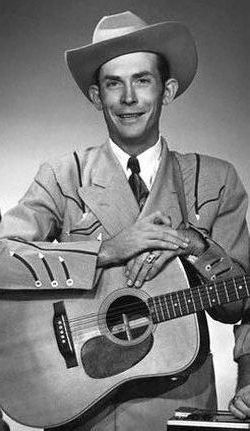
Whatever we're calling it, I want to do one for Hank Williams, a country star out of Alabama. Hank Williams has a lot of features typical to Southern American English, including some that have since been washed away. Because his backing tracks tend to be sparse and he doesn't exactly do a ton of overdubs and harmonies, it's pretty easy to pick his voice out and hear the feature.
Features that haven't changed
Glide-weakening in PRICE words. Hank's glide weakening (which can also be a monophthong) appears both before voiced and voiceless consonants.
"The midn[a]t train is wh[a]nin' low" - I'm So Lonesome I Could Cry
STRUT-centralization. This is a typical Southern feature that is still used today.
"Well I'm in l[ɜ]ve I'm in l[ɜ]ve" - Lovesick Blues
Raised DRESS vowel. This is a typical Southern feature that is still used today.
"My h[e]d is startin' to bow" - Moanin the Blues
Rhotic accent.
"The silence of a falling sta[ɹ] lights up a p[ɝ]ple night."
Features that are no longer in modern Southern English
WINE-WHINE distinction. Not many young Americans maintain this feature, but Hank uses it rather consistently.
"Hear that lonesome [ʍ]ipporwill" - I'm So Lonesome I Could Cry
"Lord I don't know [ʍ]at I'll do" - Lovesick blues
THOUGHT-LOT distinction. Hank uses an [ɒ] sound in THOUGHT words. This is distinct from modern Southerners, who tend to use a diphthong.
"Well Lord, I th[ɒ]t I would cry" - Lovesick Blues
"I told my p[ɒ] I'm going steppin' out" - Honky Tonk Blues
I been lovin' that gal for so d[ɒ]ggone long - Moanin' the Blues
Lax-HAPPY. This feature is almost dead among young Southerners.
"Well I'm nobod[ɪ]'s sugar dadd[ɪ] now" - Lovesick Blues
"This cit[ɪ] life has really got me down" - Honky Tonk Blues
"I'm free and read[ɪ]" - Hey Good Lookin'
As an aside, Hank also does proto HAPPY-breaking. He probably does this for aesthetic reasons. He also doesn't use a diphthong, but rather breaks it into two syllables.
"Something up with m[ɪ.i]" - Hey Good Lookin'
FACE and GOAT are more monophthongal than in modern American accents. This is basically dead in modern Southern English.
"And I kn[o]w a spot" - Hey Good Lookin'
"Oh b[e]by"
CLOTH-LOT distinction? For Hank, some words (especially before -s and -ng) are pronounced with a diphthong. These words fit into what is traditionally called the CLOTH set.
"That means he's l[ɑɒ]st the will to live" - I'm So Lonesome I Could Cry
"Come al[ɑɒ]ng with me" - Hey Good Lookin'
"Wr[ɑɒ]ng" - I Just Don't Like This Kind of Living
Avoiding of LOT words moving to STRUT category. This used to be more common in Southern English, but Southern English is nowadays following General American in moving these words to the STRUT category.
"Wh[ɑ]t you got cookin'?" - Hey Good Lookin'
Back GOOSE vowel. This is very unlike modern Southern accents which front the GOOSE vowel considerably.
"Moanin' the bl[u]es" - Moanin' the Blues
No FEEL-FILL merger, unlike modern Southern accents. "Feel" and "still" do not rhyme.
"That old time f[i]lling ... I can't help it if I'm st[ɪ]ll in love with you - I Can't Help It (If I'm Still In Love With You)
Light l sound before vowels. Modern Southerners (and increasingly, speakers of General American) use a dark (velarized) l in all environments.
"Moanin' the b[l]ues" - Moanin' the Blues
Other curiosities.
The values Hank uses in r-colored vowels are not always the same as in modern Southern English. For instance, "where" is pronounced as "whurr" and "there" has a low [ɛ] (modern Southern has [e]).
"And as I wonder wh[ɝ] you are" - I'm So Lonesome I Could Cry
"Tell me wh[ɝ] you think you're going" - I Just Don't Like This Kind Of Living
"Th[ɛ]re's soda pop" - Hey, Good Lookin'
Hank has a POUR-POOR distinction, though ironically not with the word "poor" itself. He has "rural" with an [ʊ] vowel, and also has no second [r] in it. This is curious considering he does not otherwise have a non-rhotic accent.
"I left my home down on the r[ʊ:]l route" - Honky Tonk Blues
There is some s-assimilation before yods. "Miss you" becomes "mish you."
"Heaven only knows how much I mi[ʃ] you - I Can't Help It If I'm Still In Love With You
Some lexical items are non-standard. "Picture" becomes "pitcher" and "sit" becomes "set."
"A pitcher(picture)" - I Can't Help It IfI'm Still In Love With You
"S[ɛ]t (sit) and yearn" - I Just Don't Like This Kind of Living
Discussion
One of the things I find interesting about Hank's accent is how it is recognizably Southern, but lacks a number of features we associate with Southern English - no drawling, fronted GOOSE vowels, and fronted GOAT vowels. The two features that definitively place it in the South are the glide-weakening in PRICE words and the centralized STRUT vowel. Otherwise, Hank Williams has little in common linguistically with a modern country singer like Luke Bryan.
Hank Williams was born in the year 1923 in Butler County, Alabama. This means he grew up in what Erik Thomas calls a "plantation area" (a term not defined but which probably serves to distinguish between heavily slave-holding areas like South Carolina versus areas with fewer slaves like Texas and Oklahoma) and in the "pre-World War II era." Both of these things are important for pinning down Williams's accent. The pre-World War II distinction is especially important, because it accounts for the FACE and GOAT monophthongs, features which no Southerner has today. If you'll look at the chart in Thomas's book, you'll see both "older" and "younger" features. Most of Hank's features can be comfortably placed in the "older" column.
Distinct from Thomas's observation that CLOTH words are always grouped with THOUGHT words, Hank seems to have different realizations for THOUGHT words and CLOTH words. It's possible that this distinction is a result of the environment (-s and -ng words), not a separate CLOTH phoneme to contrast with the THOUGHT phoneme.
One set I couldn't compare was NORTH and FORCE. This set has been merged in most varieties of English since the 20th century. Southern varieties of English were among the few in the United States to preserve the distinction, though they eventually gave out and merged. I couldn't find tokens to compare NORTH and FORCE words for Hank, so he may have the distinction! But he also may not. This would show that as far back as the 30s and 40s, the NORTH-FORCE distinction was weakening in Southern English.
I would like to compare Hank to other country singers from different time periods and different parts of the South. While it's useful to think of Southern English as one big thing - especially when comparing it with other varieties of English - this hides the real diversity within Southern accents. Country music can be a great place to pull examples of Southern accents from.
This article is also available in video form! You can watch below. The article has more points and citations while the video has more visual aids, so they both complement each other.
At the end of April, you'll start seeing memes of Justin Timberlake everywhere with the text "it's gonna be may." This, of course, is a reference to the 2000 hit song "It's Gonna Be Me," where Justin sings the hook. Only except of the expect "me," he sings "may." The meme itself dates back to 2012, but it has proven enduring as a cyclical meme. It reminds of us of both the hopeful month of May and how weird it was that pop stars used to sing like that. If you need a reminder or you've never heard the song before, here's a clip of the offending pronunciation:
"Baby, when you finally get to love somebody, guess what: it's gonna be may." - It's Gonna Be Me, N'Sync (2000)
Justin is not the only pop star to sing "me" as "may." We've all probably heard a pop star sing something like "I'm missing you like canday" or "I want to be the minoritay." The nameless but frequent phenomenon even inspired an Atlas Obscura investigation by Dan Nosowitz.
But tracing the pedigree of this feature has eluded most of the people who write about it. Nosowitz's article offers an explanation for why it happens now, but it doesn't tell us who first started using it. Moreover, it confuses the vowel in "it's gonna be may" with a different vowel entirely, which muddies the waters even further. He refers to Stevie Wonder saying "thirteen month old babay," but that's not actually what Stevie Wonder is saying: he's saying "thirteen month old bab-IH," with a short 'i' and no diphthong. These two vowels have separate histories and need separate accounts.
"Thirteen month old babee [beɪbi] ... thirteen month old babih [beɪbɪ]." - Superstition, Stevie Wonder
So why does it matter which vowel happened - singers change their vowels all the time, right? Well, most linguistic changes of this sort aren't random or arbitrary - there is usually a reason that sound changes happen, and a reason that they spread as well. The spread of "may" and "babay" doesn't seem to be caused by random innovation - it's a daisy chain of influence from disparate genres and peoples all reaching their zenith in the massive pop moment of the 90s.
I first tackled this subject in 2016 (re-published in 2017) in one of my earliest articles. This is not just a rewrite, but a totally new theory to explain just why pop singers do that thang. I hope you'll join me in what is probably the most comprehensive history of "it's gonna be may" yet.
Setting the boundaries
First, let's talk about "it's gonna be may." What’s happening is the "ee" [i] vowel is being converted to "ay" [ɪi]. This is an example of diphthongization, or a vowel "breaking" into two vowels. This breaking can apply to other words that have an 'ee' /i/ sound in them, like "knees" /niz/ can become "knays" [nɪiz]. We’ll call this pattern ‘ME-breaking.’ There some dialects that have ME-breaking commonly, like Southern American English (Lee, 2012; McDorman) and London English.
"He loves mee [mi]." No breaking.
"He loves may [mɪi]." Breaking.
Words like ‘happy’ and ‘sadly’ have an ‘ee’ sound in them, but the stress doesn’t fall on the ‘ee.’ This puts them in a separate category, called ‘HAPPY’ words. Nowadays, most dialects of English have an ‘ee’ sound in these words: this is called tense-HAPPY.
But in the 1800s, these HAPPY words were pronounced with a short 'i' [ɪ] sound. So they sounded like ‘happih’, ‘verih’, ‘anarchih.’ This pronunciation is called 'lax-HAPPY'. While lax-HAPPY isn’t popular nowadays, older speakers of conservative Received Pronunciation (Wells, 1980), Southern American English (Thomas, 2006), and African American English still use it.
So what if you had breaking in a HAPPY word? This would result in ‘happay.’ There’s no agreed-upon term for this, but I’ll call it HAPPY-breaking. You can find HAPPY-breaking in working class varieties of London English and in Yorkshire varieties, among others.
"She is happee [hæpi]." Tense-HAPPY
"She is happih [hæpɪ]." Lax-HAPPY
"She is happay [hæpɪi]." HAPPY-breaking
To keep things simple, I will use the IPA symbols [ɪi] to note that a word has vowel breaking: m[ɪi]. This is because the vowel breaking in "it's gonna be may" isn't actually identical to the sound in the word "May." Some instances of vowel breaking are not as obvious and will not sound as close to the word "May." I am less interested in the degree of breaking and more interested in the fact that it occurs at all, so both subtle and obvious breaking will be written with [ɪi].
Timeline
Here's the fun part: we're going to look at popular songs from the 20th century to find out who started this whole ME-breaking and HAPPY-breaking mess. To keep things simple, I mostly focused on songs that topped on the Billboard Hot 100, which is an American popular music chart. An even more comprehensive review would compare this with the UK charts or also look at songs that charted below #1, but I am just one person and listening to every #1 hit of the 80s was enough work for me.
One question we're going to try to tackle here is how could singers have been exposed to "may" and "babay"-like forms? Remember, it's unlikely that multiple people over multiple decades just happened to come up with vowel-breaking on their own, so we have to posit an explanation for how they picked up on it.
Unfortunately, there are rarely direct examples of a singer saying "I sang it like this because I heard it from this person/someone told me to." As such, we have to rely on some circumstantial evidence at times - such is the nature of tracing influences in pop music history. Sometimes we're lucky and we know that a singer was a fan of early singers because they've done covers of their material. Sometimes they even do interviews. Sometimes we have to rely on genre similarities and the fact that musicians tend to be aware of other people working in their scene. But sometimes there's no obvious explanation. Tracing history is rarely clean.
1950s-1960s: Lonesome Cowboy
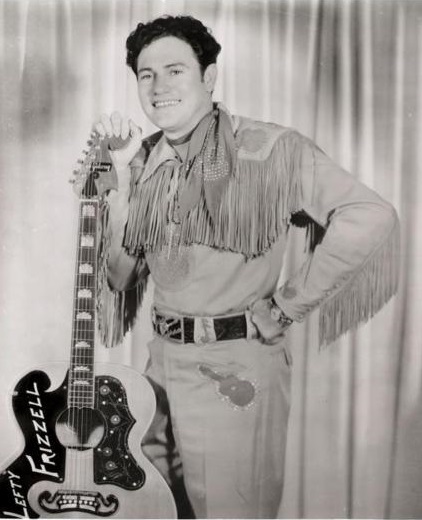
The earliest example of ME-breaking I've been able to find so far is in country music, by Southern American English speakers. Lefty Frizzell had a hit in the 1951 song "Give me more, more, more (of your kisses)," and also some ME-breaking. Another example is in his unreleased 1951 song, "You Want Everything But Me."
"They'll even pay the weddin' bills to just get rid of m[ɪi]" - Give Me More, More, More (Of Your Kisses), Lefty Frizzell (1951)
"You want everything but m[ɪi]" - You Want Everything But Me, Lefty Frizzell (recorded in 1951s, released 1981)
Another Southern country singer was Waylon Jennings. He sang a cover called "She Called Me Baby" in 1967 with some HAPPY-breaking.
"She called me baby, bab[ɪi]" - She Called Me Baby, Waylon Jennings (1967)
You could also find some breaking in jazz. The singer Chris O'Connor was Missouri born and raised, and has a diphthongized 'me' in S'Wonderful.
"That you should care for m[ɪi]" - S'Wonderful, Chris O'Connor (1957)
Overall, breaking in popular music is limited to Southerners in these two decades.
To my surprise, I was unable to find examples of African American singers with ME-breaking. ME-breaking appears to be more a characteristic of Southern American English than African American English, including Southern African American English. I haven't found examples of ME-breaking in the literature for African American English. I listened to influential black blues and rock 'n' roll artists such as Muddy Waters, Chuck Berry, Bo Diddley, and Little Richard, and Fats Domino, but they had no ME-breaking at all! (There was some lax-HAPPY, but remember that that is a different feature. Don't worry, I'm covering it in another article in the future.)
1970s-1980s: the Rock and Punk Years
The earliest example of breaking in rock music is the Rolling Stones. This group also happens to be from London, which is a region with ME-breaking. You can hear an example of it in their song "It's Only Rock and Roll (But I Like It)," from 1974:
"I said can't you say s[ɪi]" - It's Only Rock and Roll (but I Like It), the Rolling Stones (1974)
In 1975, an American-English rock group called the Arrows recorded a response to this song, called "I Love Rock and Roll." Their American lead singer also gave ME-breaking a try:
"I saw her dancin' there by the record mach[ɪi]ne ... And I could tell it wouldn’t be long till she was with m[ɪi], yeah, m[ɪi]." - I Love Rock 'n' Roll, The Arrows (1975)
Then in 1976, the English punk group the Sex Pistols released their first single “Anarchy in the UK.” Besides being massively successful, it also had ME-breaking (be -> bay) and pronounced HAPPY-breaking (anarchy > anarchay).
"I want to b[ɪi]anarch[ɪi]" - Anarchy in the U.K., the Sex Pistols (1976)
The singer Johnny Rotten came from a working-class household in London, so this ME-breaking wasn’t copped from country music. You can hear in this interview how he makes 'week' sound more like 'wake':
(1:07) Watch Top of the Pops and send their boring little letters into Melody Maker w[ɪi]k after w[ɪi]k.
From here, both ME-breaking and HAPPY-breaking appear sporadically throughout the 80s. The 1982 cover of I Love rock and roll by Joan Jett is the first #1 US hit of the 80s to feature ME-breaking, imitating the same vowel that the arrows used.
"He was looking at me, yeah, m[ɪi] ...take your time and dance with m[ɪi]" - I Love Rock 'n' Roll, Joan Jett & the Blackhearts (1982)
1986 had the top 10 hit by the Beastie Boys, “You gotta fight for your right to party.” Although the Beastie Boys were basically a rap group by that time, they started out as a hardcore punk band and the influences can still be heard in their instrumentation. Perhaps there’s also some influence in their vowels, because we hear HAPPY breaking:
"You gotta fight for your right to part[ɪi]!" - (You Gotta) Fight For Your Right (To Party), the Beastie Boys (1986)
ME-breaking hadn't just infiltrated classic rock and punk - it also made its way into glam rock. The 1987 song, "Pour Some Sugar On Me" by the English group Def Leppard should perhaps be called "Pour Some Sugar On May."
"Pour some sugar on m[ɪi]"- Pour Some Sugar On Me, Def Leppard (1987)
The 1990s and beyond: Pop Takes Over
As we leave the 80s, we can tell one thing. ME-breaking and HAPPY-breaking had firmly entrenched themselves in rock and rock-adjacent genres. You'll find examples of ME-breaking and HAPPY-breaking in rock music throughout the 90s. One could even consider them to be a part of what it means to sing rock music: a part of a rock singer "register." My favorite 90s-era of ME-breaking and subtle HAPPY-breaking is the theme song to the video game Sonic Adventure, which is a beautiful example of all the cliches associated with rock music at the end of the decade.
(upper harmony) I don't know what it can be but you drive me craz[ɪi] ... open your heart and you will s[ɪi]" - Open Your Heart, Crush 40 (1998)
However, knowing the path it took for ME-breaking and HAPPY-breaking to get into rock music doesn't explain how it got into pop music. That path is a little more mysterious and murky - but we're going to tread it anyway.
In 1994, rapper Notorious B.I.G. posthumously released "Juicy." The Brooklyn girl group Total sings on the hook:
"You had a goal but not that man[ɪi]" - "Juicy", The Notorious B.I.G. (ft. Total) (1994)
The chorus was interpolated from Mtume's song "Juicy Fruit" 1983, but this original version did not have HAPPY-breaking. Why did this girl group use HAPPY-breaking on the pop hook of a rap song? Perhaps influence from growing up around rock music? It's not clear, but what is clear is that this song was a massive hit, spreading HAPPY-breaking across the airwaves.
HAPPY-breaking and ME-breaking both appear in an unusual place in the 90s - Mariah Carey’s #1 hit song “Always Be My Baby.” This is one of the earlier places in pure pop music where we see HAPPY-breaking and exaggerated ME-breaking.
"Boy, don't you know you can’t escape m[ɪi]? Ooh darlin' cuz you’ll always be my bab[ɪi]" - Always Be My Baby, Mariah Carey (1995)
Like with "Juicy," it's not clear how Mariah came across this form. Perhaps she picked it up from "Juicy" - Mariah was a noted fan of hip-hop. She was also a noted fan of glam rock - she's covered songs by Def Leppard, which we noted were big users of this sort of breaking.
HAPPY-breaking makes a re-occurrence in the song “Quit playing games with my heart” by the Backstreet Boys. This song was produced by the Swedish producer Max Martin, a fact that we'll revisit later.
"Bab[ɪi], so bad, bab[ɪi], quit playing games with my heart." - Quit Playing Games (With My Heart), the Backstreet Boys (1994)
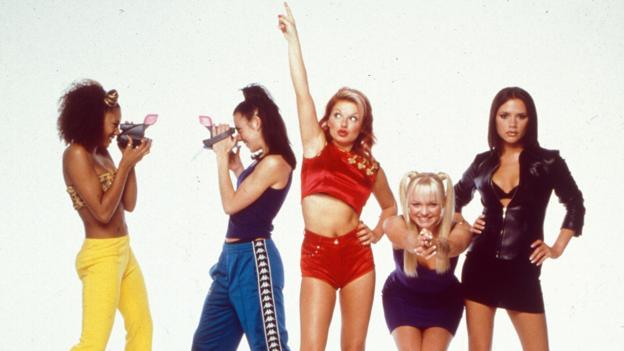
Then we have "Wannabe", released in 1996, has subtle ME-breaking by Mel B. Mel is from West Yorkshire, another region with ME-breaking. (Source).
"And as for m[ɪi]? Ha, you’ll see!" - Wannabe, Spice Girls (1996)
In 1999, HAPPY-breaking and ME-breaking reached levels of vowel-breaking heretofore only dreamed of by man with Mandy Moore talking it all the way. This is one of the most obvious and exaggerated uses of HAPPY-breaking. It shows that by this point, HAPPY-breaking and ME-breaking had become associated with contemporary pop music.
"This feelin’s got me week in the kn[ɪi]s... come to m[ɪi], sw[ɪi]t to m[ɪi]... I'm missing you like cand[ɪi]" - Candy, Mandy Moore (1999)
It all comes full circle in the year 2000. N'Sync released “It’s gonna be me,” which topped the US charts for two weeks. The song has both normal 'me' and ME-breaking, which makes them easy to compare. No HAPPY-breaking, though.
"I remember you told m[ɪi] ...It’s gonna be m[ɪi] ... but in the end you know it's gonna be m[i]. It's gonna be m[ɪi], it's gonna be m[ɪi], gonna be m[ɪi]"
Justin was asked about this pronunciation in an interview and said something rather interesting:
Justin: I will say in my defense Max Martin made me sing 'me' that way. [...] I just want to throw Max Martin on the chopping block for that one.
[...]
Anchor: Did he give a reason for that?
Justin: I think he just wanted me to sound like I was from Tennessee. [...] He just kinda likes that.
Max Martin gave him direction on how to sing. Max Martin, if you'll remember, also produced "Quit Playing Games With My Heart," which had HAPPY-breaking. Perhaps he also guided the Backstreet Boys in using this pronunciation.
Timberlake clearly associated it with southerners as opposed to english punk rockers, but Max Martin was a fan of hard rock, so it’s likelier that Max Martin heard the pronunciation from them and decided to use it. He also could have picked up on it from Mariah Carey and the Spice Girls - he listened to pop music and could tell a trend when he heard one.
Noticeably, a number of Max Martin produced songs feature ME-breaking. This may seem coincidental, but Max Martin has been known to record demos of songs before giving them to singers, and telling them to copy the performance as much as they can. Another popular singer he worked with was, of course, Britney Spears. (She has enough linguistic peculiarities otherwise to merit her own article.)
There's nothing you can do or say, bab[ɪi] ... I'm not your property as from today, bab[ɪi]
Martin is known to be controlling about the music he writes. Music journalist John Seabrook writes:
And yet Martin is known to insist that the artists he works with sing his songs exactly the way he sings them on the demos. In a sense, Spears, Perry, and Swift are all singing covers of Max Martin recordings. They are also among the few people in the world who have actually heard the originals. Countless self-proclaimed performers on YouTube sing Max Martin songs, but there is not a single publicly available video or audio recording of Martin performing his own stuff. (In the course of researching my book “The Song Machine,” I got to hear an actual Max Martin demo, for “… Baby One More Time,” when a record man who had it on his phone played it for me. The Swede sounded exactly like Spears.)
If true, this would go a long way to explaining why other artists who have worked with Martin use breaking. For example, Martin worked on Katy Perry's song "Part Of Me." In this demo, she even rhymes "me" with "way" twice:
"I just wanna throw my phone away, find out who is really there for m[ɪi]... You can take the dog from m[ɪi], I never liked him anyway. In fact you can take everything except for m[ɪi]."
2010-era pop songs don't have to be produced by Max Martin, but his imprint is still strong. Taylor Swift's song "Out of the Woods" was produced by Jack Antonoff, but she still uses ME-breaking on the high notes.
"You were looking at may [mɪi], you were looking at may [mɪi], you were looking at may [mɪi]."
The Run-down
So we've traced the path that HAPPY-breaking and ME-breaking have taken through pop history. HAPPY-breaking and ME-breaking are no longer hot and trendy. But they haven't faded away entirely - instead, they've found a home in the linguistic toolbox of singers. They've expanded from the rock singer register to the pop singer register. Perhaps this is why we don't even comment on contemporary singers who still use it; it's become invisible to us as a sign of pop-ness.
The question to ask is why singers found these features so appealing. There are plenty of other vowels they could have used, after all. Why these?
Bio-mechanics and song
Nosowitz's Atlas Obscura article has an important point: close vowels, like 'ee' [i], are harder for singers to sing with than more open vowels like 'ih' [ɪ]. If you'll look back at a lot of the examples, you'll notice that breaking is more common on sustained or high notes. I personally do find it easier to sing high/sustained notes on 'ih' and 'ey' than on 'ee' (Mitrano, 2002).
Changing vowels to make singing easier or more 'beautiful' isn't unusual at all in sung speech. Classical singers have to learn the correct vowel placements to get the large, resonant and particular sound they need (Nix, 2004). These vowel placements are not the same as you would find in spoken speech! Pop singers are not usually classically trained, but you don't need classical training to experience the bio-mechanical feedback when you sing 'ee' on a high note versus 'ey.'
What if you could used these sounds on a lower note, which doesn't need the help of a different vowel? Vocal coach Lis Lewis (quoted in Atlas Obscura) suggests that "this is an attempt to co-opt the signifiers of intensity without actually needing to use them." This would match with JC Chasez's recollection of how "It's Gonna Be Me" was recorded:
[...]But because "It's Gonna Be Me" has become a meme for the month of May, it was interesting when we cut that record. It was actually a very conscious choice to say it that way, because we wanted it to really punch.
For certain words, we bent the pronunciation. We were hitting the L's hard on "lose." Instead of saying, "You don't wanna lose" -- which would be kind of boring -- we'd be like "You don't wanna NLUUSE." But when you're listening to someone in the studio singing it that way, at first you're like, "What is wrong with you?" But you have to dig and hit these different shapes of consonants and vowels to give them energy. Instead of saying, "It's gonna be ME" we said "ET'S GONNA BAY MAY!" for it to hit harder.
Those conscious choices sound funny from the outside, but when it all comes together it sounds amazing. There weren't memes back then, but we knew it needed to be more.
There is another process we need to consider before coming to the conclusion that it's all "fake energy"...
The process of enregisterment
A register is "a particular socially identifiable variety of a language." The classic examples are of formal and informal registers: a person who is giving a public speech will be speaking in a more formal register than someone who is hanging out at home with their friends.
You can also broaden the concept to refer to things like how English speakers can put on a 'vampire voice' by saying "I vant to suck your blod." Internet linguist Gretchen McCulloch points out that this is because one of the most iconic Draculas was played by Bela Lugosi, a Hungarian man with a Hungarian accent. So when Adam Sandler's vampire character in "Hotel Transylvania" says "welcome to hot'el trenseelvenia," he's not trying to communicate that his character is Hungarian - he's trying to communicate that he's a vampire. We call this association of linguistic features with an identity "enregisterment."
This concept can also apply to music. Originally, the people who said "may" and "happay" were just using their own Southern or London accents. But when singers started copying their pronunciation, they removed breaking from its origins. In turn, these features were re-analyzed and "enregistered" as part of a rock register. As the feature kept popping up in smash songs, it also became enregistered in the pop register.
Registers aren't mandatory - you can have vampires without Eastern European accents. But registers do communicate something: your awareness of belonging to that group. A rock or pop singer who uses "may" is able to signal their awareness of rock and pop singing styles (not to mention make use of a useful vowel modification in difficult songs).
That doesn't make using "may" a sign of fakeness or inauthenticity. Registers aren't always explicitly taught or acquired. You can learn different registers by osmosis: Just being in a different linguistic environment makes people change their own speech to sound more like everyone else. This is called "accommodation" and it's a sign of good faith and wanting to make things easier for other people (West & Lynn, 2017, p. 468-469).
Conclusion
Linguistic innovations happen all the time, but not all of them catch on. With HAPPY-breaking and ME-breaking in music, we are lucky to have such a long corpus of recorded music to use to trace its origins. The spread of breaking is a fascinating example of how different genres of music interact with and define each other. It's also an example of how modality-specific features can make a difference: it helps that breaking made it easier to sing harder notes.
Despite the massive spread of breaking in music, it remains locked to sung speech. Nobody starts saying "I hope you love may" or "I hope you're happay" in speech unless they're joking (or speak one of the varieties of English that we mentioned with these features). This also illustrates another feature: how we are clearly able to distinguish between registers. A singer can say "it's gonna be may" multiple times in a song and then get on an interview and use "me" consistently the entire time. Sung speech and spoken speech registers aren't anywhere as porous as the different genre registers are.
In the Atlas Obscura article, Nosowitz writes that it is surprising that nobody has taken the linguistics of pop music seriously considering how obvious the difference is, even for lay people. There is a treasure trove of interesting information for both linguists and musicologists in sung speech, if we only care to listen. After all, the simple meme that started this whole thing was almost 60 years in the making.
West, Richard & Turner, Lynn. 2017. Introducing Communication Theory: Analysis and Application
Mitrano, Melanie. 2002. The New Music Connoisseur. Vowels and Word Articulation. ("Closed vowels, as in the words greet and moon, are difficult to sing and articulate in the upper range.")
The PIN-PEN merger, where words like "pen", "Lenin", and "hem" sound like "pin," "linen," and "him," is one of the most ubiquitous mergers in American English - but it only started spreading a century ago. Its expansion has been silent, as entire regions of the United States acquire the merger while avoiding societal scrutiny.
Today we'll be taking a look at this common merger and the history behind its appearance, its spread, and how it's regarded.
What is the PIN-PEN merger?
Most dialects of English pronounce words spelled with 'in' differently from word spelled 'en'. This means that "pin" and "pen" aren't homophones, and "ten" and "in" don't rhyme.
But some dialects of English pronounce them so that they sound the same. Usually, the 'en' sounds sound more like the 'in' sound.
You can hear the difference in the following example. The first audio clip is 'when' pronounced with 'en'.
When [wɛn]
The second audio clip is 'when' as spoken by someone with the merger. It sounds like 'win.'
Whin [wɪn]
Who has it?
The PIN-PEN merger is most commonly found among speakers of Southern English. You can hear it in people with strong Southern accents, such as Charlie Daniels (Wilmington, North Carolina), but you can also hear it in people who grew up in the South and otherwise speak General American, like YouTuber Lindsay Ellis (Tennessee).
Johnny said, "Devil, just come on back
If you ever want to try agin
I done told you once you son of a bitch
I'm the best that's ever been
Well fortunately, I have literally never sinned, so condimn away I shall.
Another large group with the merger is speakers of African American Vernacular English. They themselves can be Southern, but they can also be from other regions. Janelle Monae (Kansas City, Kansas), Kanye West (Chicago, Illinois), and Nicki Minaj (born in Trindad, raised in New York, New York) are not from the South, but they all have the PIN-PEN merger. (Not all African American English speakers have the PIN-PEN merger, though, especially if they live outside the South!)
Janelle Monae: I worked with Prince ... as a mintor
Nintindo, and we in the ind zone [...] like we in the frind zone
Okay, get your kids, but then they got their frinds
I pulled up in the Benz, they all got up in
We all went to din' (dinner)
Although the PIN-PEN merger usually leans in favor of 'PIN', sometimes it can actually lean in favor of 'PEN.' A great example of this is Emily Procter, an actress born and raised in North Carolina, who portrays Ainsley Hayes, a character also from North Carolina. Notice how she pronounces "Pinafore" as "Penafore":
"'He is an Englishman' is from H.M.S. P[ɛ]nafore [...] they're all about duty... then it's p[ɛ]nafore."
Here's a Western example from the show Gravity Falls, that we used earlier in the article. You can hear Colorado native, Kristen Schaal, use the PIN-PEN merger when she says "when" like "win." Contrast this with Los Angeles native Jason Ritter, who uses an un-merged "when."
Dipper: Wh[ɛ]n are we?
Mabel: The real question is, wh[ɪ]n are we?
Where did the PIN-PEN merger come from?
Vivian Brown (1991) argues that the PIN-PEN merger may have originated in English speech patterns. Historically, there were rural Southern Irish varieties with the merger - a feature that may date back to seventeenth century English. It's possible that this is the source of the merger in the Southern United States.
Although most Irish emigrants from the 1800s settled in the Northeastern United States, many Irish Catholics settled in the large cities of the Southeastern United States (e.g. Charleston, Savannah, New Orleans).
The PIN-PEN merger is now sharply recessive in Irish speech. I have found two examples of Irish English speakers with the PIN-PEN merger: a man from Kerry and a woman from Limerick.
So it's plausible that Irish English was the source of this feature in American English. When do we start finding references to it?
The actual appearance of the PIN-PEN merger in the US isn't clear. Paul Longmore reports that colonial Americans said "ingine instead of engine, and yis instead of yes" (so maybe all 'eh' words were changed to 'ih'), meaning they may have already been a very early PIN-PEN merger from the beginning of colonization.
Meanwhile, the PIN-PEN merger in the United States appears to have started in the American South in the 1800s (Brown).
We don't know if the merger originated in white populations (from Irish immigrants) and spread to black populations, or if it developed independently in black populations and spread to white populations, or even if it was developed independently in both populations, but the end result is that both Black and White Southern Americans ended up acquiring this merger.
The PIN-PEN merger does not appear to have been universal at the time. This testimonial from a former slave does not have the PIN-PEN merger. Slave owner Rebecca Latimer, born in Georgia in 1835, also did not have the merger (video here).
Moreover, a study of Confederate soldiers who escaped to Brazil and had an enclave of English also provides some interesting clues. The descendants of those soldiers still spoke English, but it didn't sound Southern at all - among other things, it had no PIN-PEN merger.
The PIN-PEN merger may have only been occasional in the South in the 1800s, but by the 1900s it started spreading. Bailey and Maynor (1989) say the merger "began in the last part of the nineteenth century and worked its way to completion during the last half century [1900-1950]."
Beginning in 1916 and lasting up until 1970, African Americans began migrating in large numbers out of the South and to the Northeast, the Midwest, or the West. This group would have possibly still had the PIN-PEN merger, which would explain why speakers of African American Vernacular English outside of the South can still have the PIN-PEN merger.
In the early 21st century, the PIN-PEN merger remains widespread among the South and variably in the African American diaspora.
Curiously, there are isolated examples of the PIN-PEN merger happening in the West and Midwest. This could be a result of Southern transplants moving to the West, but it could also be an independent development.
Why does the PIN-PEN merger happen
The most important thing to notice about the pin-pen merger is that it only happens before nasals. This means that "pit" and "pet" are unaffected by the merger. Only "n" and "m" are really affected, since there are not many words ending in "eng".
There are multiple acoustic explanations for why the PIN-PEN merger happened. One of them is that vowels that appear before nasal consonants tend to be nasalized, and this affects production and perception of the vowel. This could have facilitated the merger happening. Another explanation is that PIN and PEN do not actually merge to PIN, but to a vowel between PIN and PEN that most people categorize as PIN - a result of both nasalization and of /i/ vowels being lowered and /e/ vowels being raised in Southern English. (Source 1, Source 2).
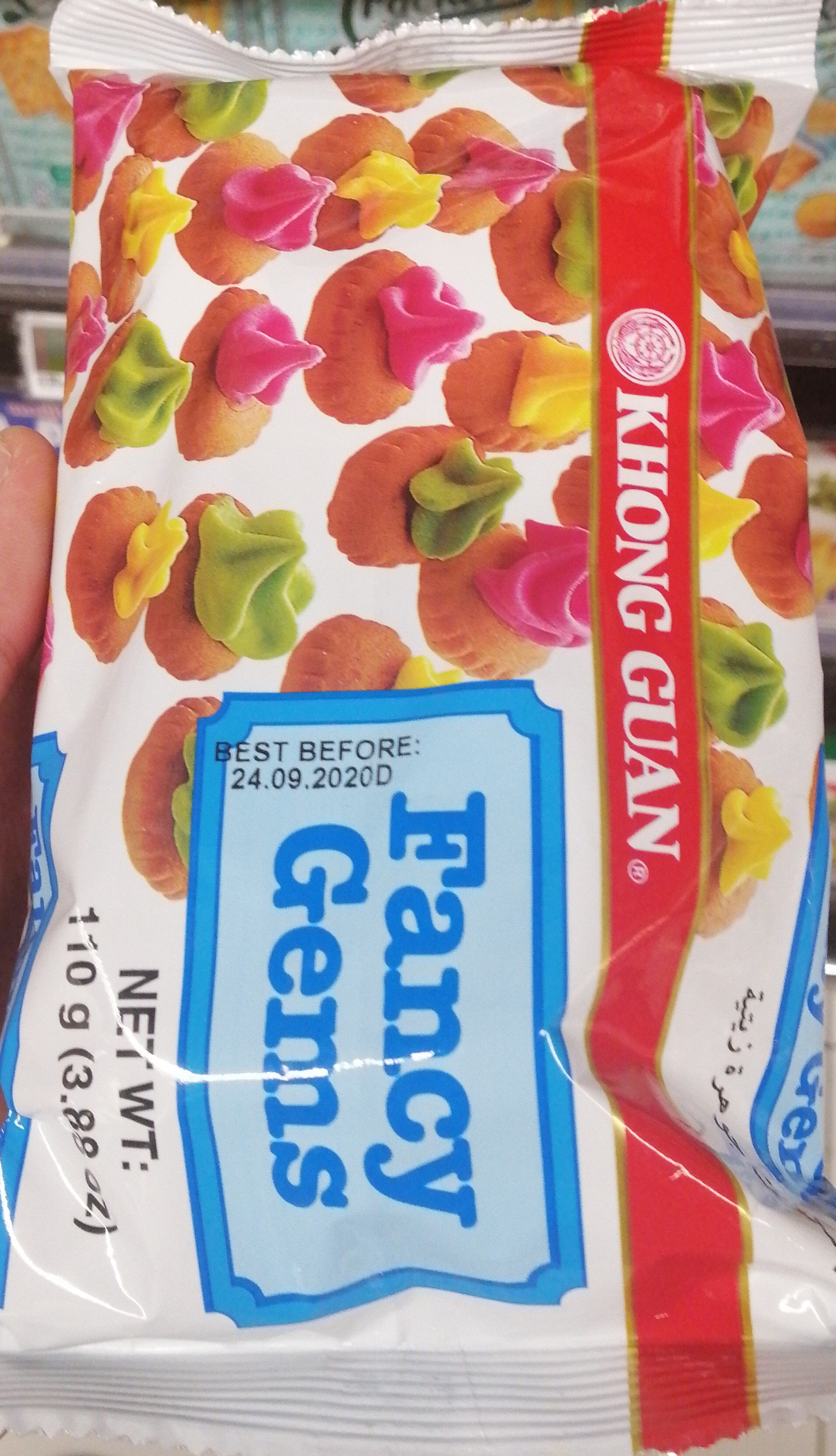
The pin-pen merger also doesn't have to be absolute; you can find examples of people who only have it in certain words. An anecdotal example is a friend of mine who pronounces "when" as "win" and once offered me some "Fancy Jims." When I asked her what a Fancy Jim was, she pointed to a bag that said "Fancy Gems." She denies having said "Jims," perhaps because for the most part she does not have the merger.
Effects of the pin-pen merger
The pin-pen merger affects a large number of commonly used words, yet it rarely seems to comprehend intelligibility. The most common mixup, appropriately, is between "pin" and "pen."
I had an encounter once where I asked two store attendants where the "pens" were and one directed me towards the "pens," but the other directed me towards the aisle with pins. The second store attendant not only had the merger, but wasn't able to tell "pen" and "pin" apart in speech. The first store attendant told her "no, those are pins, she's looking for pens, like to write with."
When I've spoken to people who have the complete merger, they tend to be surprised that anyone distinguishes between "pin" and "pen" and say they had never really noticed it before. This is common among people with certain types of mergers that don't attract much attention. An example from a Language Log commenter:
I currently work in Chicago but I'm from South Texas. My boss seems to get a real kick out of my pronunciation of the word "pen".
We have to go to him for supplies and he always make me repeat myself whenever I ask for one and laughs incessantly. He says that I pronounce the word "pen" is funny. My ignorance must shine through because although I've tried to understand the "sound" difference between "pin" and "pen", I just can't. You write with a "pen", you stick something to the wall with a "pin".
He states that I say "pin" when I should say "pen". When back home in Texas, when asked for a "pen", I've never given someone a "pin" or the other way around. So I don't understand how he hears a difference.
That being said, when people become aware of the pin-pen merger, it can become a source of mockery, as this author shows.
I recall reading an article (now unfortunately lost) about a college student from Oklahoma who went out of state for college, and who was made fun of for multiple Southernisms. His classmates purported to "teach him" how to speak "properly." One of the differences he had to learn was between "pin" and "pen." (Another one was to say "milk" instead of "malk.")
The pin-pen merger opens up a number of rhyme, pun, and joke possibilities that aren't possible if you distinguish pin-pen. The following are some examples:
"Ken, which is Nick backwards" - Griffin, Episode 419 of podast My Brother, My Brother, and Me
11:55pm I'm trying to figure out why haven't Wendy's made a commercial saying "Hold on to your wigs because it is very Wendy out here"
I can be a piece of sunshine, inner peace, inner-tainer (entertainer)
Rocket, Beyonce
The Ind Isn't Near
The PIN-PEN merger doesn't seem to be going away anytime soon and may even spread to other American dialects. But it doesn't seem like it's going to affect every dialect of American English. As has been mentioned on this blog and on practically every article about linguistics, language change is inevitable, and that sometimes includes mergers.
The PIN-PEN merger is an example of how language change can happen right under our noses and both the people affected and those not can be unaware of it. The world didn't end and the English language was not split in two; now one side just has to mention when they talk about an ink pen or a sewing pin. It's a harmless difference that has also opened up a number of interesting artistic and comedic avenues.
Do you have the PIN-PEN merger? Were you aware of it before reading this article? Have you ever tried learning to distinguish between the two? And if you don't have the merger, do you notice it in those who have it? What are some cases when there's been a mixup due to the merger?
If you've spent your whole life only speaking one dialect, it can be utterly mind-blowing to know that there are dialects out there that make totally different distinctions that you were not even aware were possible. I speak a mostly uninteresting variety of General American that mostly corresponds to that hegemonic variety you find on television, with a few minor diversions from it. Learning about different mergers and sound changes that happened in English is one of my favorite parts, and I'd like to share some fun accidents of English language history with you all.
Today let's take a look at something that I am sure my American visitors and English visitors will diverge sharply on, and that is whether the words "hurry" and "furry" rhyme. The majority of my American visitors will likely say that they do rhyme, while my English visitors will say there is no way they could rhyme. (I count myself among the former.)
Canadian readers will likely side with the Americans on this one, while Australian and New Zealand readers may side with our English and British readers. If you're from South Africa, Nigeria, India, Singapore, or any other part of the world where English is spoken as a national language in addition to another language, I would like to hear how you treat these two words!
Americans and Canadians may ask, "how can you pronounce these two differently?" And the answer is that "hurry" will be pronounced with an 'uh'[ʌ] vowel instead of an 'er' vowel. Imagine saying 'huh' and then 're' afterwards, and you will approximate how 'hurry' sounds in those dialects: [hʌri]. In broad North American English, they will instead collapse into an 'err' sound.
If you'd like a comparison of how these two sound, listen to these clips. The first one is from a speaker who says 'huh-ry'.
A h[ʌ]rry up affair
The second one is from a speaker who says 'herr-y.'
A h[ɝ]rry up affair
How to tell HURRY and FURRY words apart
'Hurry' is not the only word that has this pronunciation. 'Murray,' 'courage', 'worry', 'turret', 'curry', are just some of the examples of words that have the 'uh' + 'r' sequence in them. You'll notice that these are all multisyllable words. That's in English phonology, 'uh' /ʌ/ is a 'checked vowel' and cannot appear stressed at the end of a word. (Depending on whether you consider the 'uh' in strut and the 'uh' in comma to be the same vowel, the explanation for this varies. Take this as a sort of broad explanation that will work for most cases as opposed to a definitive phonological theory that is valid for every single variety of English.)
Meanwhile, words with 'er' /ɜr/ can be one-syllable words: fur, her, nerd, word. And if you add a suffix to them, the 'er' doesn't change: fur-ry [fɜri], nerd-y, word-y.
So if you're a North American who is distressed to find out that their English accent impersonation is subpar due to missing this essential distinction, how can you learn to distinguish them? English spelling can give us clues. One hint that a word might be an 'uh' /ʌ/ word is that it is spelled with a '(o)ur(r)' and has a vowel after it. If we know our multisyllable rule, we know that a hypothetical word 'lur' cannot be a candidate for being an 'uh' word, but a word 'lurry' might.
You can also remember that 'er' words don't become 'uh' words if you add suffixes to them - if you recognize that a word like 'furry' comes from 'fur', which has an 'er' sound, you'll realize that even though it has the 'urr' spelling, it's not an 'uh' /ʌ/ word.
When it comes to phonological rules, though, English likes to throw exceptions at us. For example, you may expect the word 'furrier' meaning 'a person who sells furs' to be an 'uh' word. But it is actually pronounced 'fuh-rier' [fʌriər], even though it comes from 'fur.' To make it more confusing, the word 'furrier' [fɜriər] which means 'more furry' is actually an 'er' word!
The unfortunate reality is that although looking at spelling helps, in the long run you simply have to memorize the 'uh r' words if you did not grow up hearing them.
Meanwhile, if you're from the UK, Australia, New Zealand, or any other non-North American English speaking area, and you want to imitate a General American accent, your task is simpler. Just replace all 'uhr + vowel' words with 'err' and you're set! Make sure you use a rhotic 'err'.
Not all American dialects have this merger. Older dialects of New York Metropolitan English, Boston English, and Coastal Southern American English may have the distinction. Keep this in mind if you're doing an older American actor or a period piece from earlier in the century. And there are more conservative General American dialects that keep the distinction, too. Just consider the age and period of the character and piece.
Why did this merger happen?
Let's take a look at the dialects that have the HURRY-FURRY distinction:
The dialects that do not have the merger are non-rhotic (majority of English English dialects, Australian/New Zealand English, conservative New York/New England/Coastal American), and the rhotic ones either do not have r-colored vowels (Scottish English and Indian English) or have very lightly r-colored vowels (General American English, Irish English). R-coloring is when a vowel is pronounced seemingly at the same time as an 'r' sound, with the 'r' appearing at the end. Meanwhile, dialects with the merger have noticeable r-coloring on vowels.
R-coloring causes vowels to trend towards sound like 'er' [ɝ]. In dialects that have strong 'r' coloring, there are a lot of mergers that happen before 'r's that do not happen in other dialects (another example marry-merry-mary merger and 'cure' sounding like 'kyer').
The 'r' itself isn't the problem - Scottish and Irish English are rhotic accents that preserve the distinction. The problem is the nature of the 'r', and how that 'r' ends up strongly attached to other vowels. It's also hard to make a lot of fine-grained distinctions when you have strong 'r' coloring - try it yourself, combining vowels with an 'r'. In a sense, r-coloring is contagious!
What are some examples of this sound in the wild?
Because the HURRY-FURRY distinction was still relatively common at the beginning of the century, when sound recording was beginning to take off, we can find some early examples of HURRY-FURRY distinction in Americans.
From 1933, Brooklyn-born singer/actor Mae West gives us one of our earliest examples in her song 'A Guy What Takes His Time':
A h[ʌ]rry up affair
In 1953, South Carolina's Eartha Kitt gives us another 'huhry' example:
So h[ʌ]rry down the chimney tonight
A male ensemble member in the track 'Orphan in the Snow' from the musical Celebration (1969) gives us 'huhry' as well:
So huhry huhry huhry huhry huhry little orphan boy
Finding 21st century examples of American youths saying 'huhry' is more challenging. The closest I've ever found is the way Meghan Trainor, who is from New England, says 'encourage' in her song "No." But she doesn't use this pronunciation on other 'uhr' words like 'worry', and perhaps it's really just an 'eur' instead?
How you let your friends enc[ʌ]rage (?) you
Yeah my mama she told me don't w[ɝ]rry about your size
Finding examples of English English speakers with the distinction is easier. Listen to how Prince Charles says 'encouragement':
Fun fact - there are actually not as many 'ehry' words as I would have expected, and I had a harder time finding examples of 'furry' or other 'er' + vowel words. Thankfully, my search results found that there is a British community of 'furries' on YouTube, which is useful to provide a counter to the 'uhr' above:
'It has come to my attention that the f[ɜ]rry scene in the United States is a hell of a lot different than the f[ɜ]rry scene in the United Kingdom... they list f[ɜ]rry as their occupation ... f[ɜ]rry in name only.'
Some speakers of English English aren't aware that Americans merge 'hurry' and 'furry'. Even if they try to Americanize their accent for whatever reason, they still continue using 'huhry.' Here's an example from the English-Irish band One Direction, with their song 'Back For You' from Take Me Home (2012).
You don't have to w[ʌ]rry
In dialects of Northern English English where all 'uh' words are pronounced with a short 'u' vowel, you can actually see this affect 'hurry' words so that they sound like 'hoory.' Listen to the below football commentator from North England say 'wurrying' for 'worrying.'
They avoided the press quite c[ʊ]mfortably... Is this now the w[ʊ]rrying time for Liverpool fans?
In an unusual twist, I've found an example of an American who uses a short 'oo' in an 'uhr' word. Dinah Washington, who was born 1924 in Alabama but raised in Chicago, Illinois, pronounces 'flurry' as 'floory' in her 1961 recording of 'Mad About The Boy.' Any ideas what's going on here?
Who's in the fl[ʊ]rry of her first affair
What does the merger sound like?
The Andrews Sisters were an American trio. The youngest sister was born in 1918 in Minnesota (the American Midwest), meaning they probably finished acquiring their native language by 1930. If you compare their 'worry' to the 'er' they use in 'cure' and 'hearse,' you can tell that it's not quite the same sound. But it's not a distinct 'uh ri' like Mae West uses in 'A Guy What Takes His Time.' Perhaps this is an example of the merger in progress? The following song was recorded 1952.
if you start to w[ʌ]rry, you can order the h[ɝ]rse... So why w[ɜ]rry? Why w[ɜ]rry? W[ɜ]rry gets you nowhere at all!
A clearer example of a merged 'uhr' vowel can be found in child singer Shirley Temple. Shirley was born in 1928 in Santa Monica, California. Shirley was 7 years old when she starred in The Littlest Rebel (1935) and she's clearly using an 'err' vowel for the song "Polly Wolly Doodle."
If you think you're gonna w[ɝ]rry, you can stop it in a h[ɝ]rry
That someone as young as Shirley was used the merged vowel means it was possibly already done by the time she started acquiring language. California therefore would be very likely to have had the merger at the beginning of the century.
Another Californian example is the Beach Boys. Their song "Don't Worry Baby" (1964) clearly uses an 'er' vowel. (Also, am I crazy or does Brian Wilson, the lead, use a rounded, fronted 'er' in general? He always sounds like he's trying to say a short 'oo' and an 'r' at the same time.)
Don't w[ɝ]rry baby
Halsey is from New Jersey, and uses a 'her' vowel in 'hurricane.
I'm Halsey and this is h[ɝ]rricane... I'm a h[ɝ]rricane
Even new Yorkers have lost this distinction. Cardi B, who is from the Bronx, has reduced 'worry' to 'werr' entirely, showing how the 'r' colored vowel spreads.
Hectic, don't w[ɝ]rr 'bout what's on my left wrist
Modern hip-hop and rap uses the HURRY-FURRY merger clearly. Canadian singer Drake's 2013 hit "Started From The Bottom" shows a clear example of an 'er'y 'worry':
I'mma w[ɝ]rry 'bout me
How do other languages and ESOL speakers deal with English loan words?
The question of which variety of English gets used as the basis for second language instruction is usually related to what region you're in. In North America, you are likely to find American English as the basis due to the United States being the most prominent English speaking power. In Europe, you are more likely to find English English being used as the basis due to the United Kingdom being the most prominent English speaking power nearby. But it's not always as simple as that.
One fun example is ABBA, the Swedish pop band from the 1970s. The Swedish National Agency for Education, or Skolverket, has historically explicitly taught British English as the default (see page 3, background to research). American English was not taught until 1994 (source). This means the members of ABBA almost certainly experienced British-centric English education.
But the variety of English they use in their music has some noticeable American flavor. The way they say 'chance' in 'Take a chance on me', as a dipthongized 'kean', is distinguishably American - among other features. How do they treat the 'uhr' words? Well, inconsistently. In 'Take A Chance On Me', 'worry' and 'hurry' have an 'er'-like sound in them. But in 'If It Wasn't For The Nights,' the word 'courage' has an [a]-like-sound (which is as close as they ever get to the American 'uh', which does not exist in Swedish). And in 'When All Is Said And Done,' 'hurry' is also pronounced with an [a] sound (the same vowel they use in 'done').
I'm no h[ɝ]rry ... you don't have to w[ɝ]rry ... I'd have c[a?]rage left to fight... There's no h[a]ry anymore when all is said and d[a]ne
How about Japanese, which has a number of English loanwords? Both American and British English have historically influenced Japanese. But when using the katakana syllabary to represent the sounds of English words, it bends towards British English, and this is seen in the difference between 'furry' and 'hurry'.
'Furry' is ファーリー (faarii). This matches with how the 'er' sound is usually transliterated into Japanese, with a long 'aa' sound. Meanwhile 'hurry' ハリー (harii) is transliterated with a short 'a' sound, as is used to represent the 'uh' sound. In a hypothetical Japanese English, you could have a length-based HURRY-FURRY distinction! (source)
You can see a similar transliteration distinction in Russian, where the 'uh' word 'curry' becomes карри 'karri', while the 'er' word 'girlfriend' becomes гёрлфренд 'gyorlfrend'.
Let's wrap this section up with an example from a Latin American Spanish speaker. Shakira was born in Colombia. In her song "Timor," you can hear that she uses an American-ish 'er'-like vowel in 'hurry' and 'worry'.
if they forget about us, then h[e]rry, if we forget about 'em, don't w[e]rry, if they forget about us, then h[e]rry
Conclusions
Do you merge HURRY and FURRY, or are they distinct to you? Perhaps you only have a partial merger? If you speak English as a second language, were you taught to pronounce these words differently? As always, I would love to see new examples.
Postscript
Another example of a strange realization of a HURRY word: Christina Aguilera seems to realize "worry" to rhyme with hoary! She's from Staten Island, New York City, but moved around a lot as a child.
I have spoken about glide affrication before - the process that makes "y" sound like "j" and "w" sound like "v." But did you know there's also affrication of stops in English? It makes "t" sound like "ts" and "d" sound like "dz." It can also make "k" sound like "khhh" and "p" like "pf".
What causes stop affrication? Well, it's a natural result of 'lengthening' a stop. A stop, by definition, is when a bunch of air builds up behind part of your mouth and is then suddenly released, causing a 'pop' sound. How can you lengthen this release of air? You can't, but you can continue pushing air from the lungs through, which causes a friction - hence affriccation. You can think of it like a stop combined with a fricative that's formed at the same part of the mouth.
Wells's Accents of English associates this sort of affrication with Cockney English speakers. But I've found examples of it across different dialectal regions. Like S-retraction, it seems to be a change that has developed multiple times in different places.
From New York City - musicians as distinct as Latin pop singer Ricky Martin and j-pop singer Utada Hikaru have d-affrication. Utada's example is especially song. (I recommend headphones to be able to hear the frication more clearly compared to the music.)
Her lips are dzevil red
The dzaily things
Billy Joel also has t-affrication at the end of a word:
If that's what it's all abouts, mama if that's movin' up, then I'm movin' outs... mmm I'm movin' outs.
Over in California, Disney Channel child actress Emily Osment (from Hannah Montana) has some dramatic d-affrication:
Dzoesn't matter what you say, I'm knockin' you dzown, dzown, dzown
And in Texas, fellow Disney Channel alum and singer Demi Lovato has some d-affrication, though not consistently (audio slowed down):
Are you kidding me? I'm so not a dziva
In the Midwest, the lead singer of the rock band Fallout Boy, Patrick Stump, frequently uses affrication in his music. Sometimes it's from lengthening the consonant. Compare the 'k' in 'mistakhhh' to the simply released 'k' in 'take':
And just one mistakhh is all it will take
Stump also seems to display a curious case of p-affrication where 'proof' sounds like 'pfroof' (at least, the official lyrics are 'proof'). This has led multiple fans and lyrics sites to mistakenly hear the lyric as "frozen fruit."
And here's the frozen pfroof
Some of these examples seem to result from attempting to 'extend' a stop consonant (Stump's "mistakkhe"). Some might result due to being near a front vowel, like Demi Lovato's "dziva." This sort of affrication before front vowels also happens in Canadian French (audio slowed down):
La fondation Celine Dzion
A similar thing happens in Russian. In Russian, oral stops that are palatalized (pronounced with the tongue raised, as if prepared for a 'yuh' [j] sound) also have some frication (source.
Affrication can progress even further to become lenition, so that the 'stop' component disappears completely. In Liverpool English, this can result in 'khh' simple sounding like a sharp 'hhh' [x]. The following clip was originally found via Dialect Blog and shows the [x] appearing in Liverpool footballer Steven Gerrard's speech.
Every player is loohing (looking) forward
I have [dz] as an allophone of /d/ in my speech. I especially have it at the beginning of a syllable, not at the end. Do you have any stop-affrication? What about stop-lenition? Are there any other examples you are familiar with, cross-dialectally or cross-linguistically?
Updated:: with more audio samples besides YouTube.
Glides, or semivowels, are made by having the tongue almost come in contact with part of the mouth. For example, when you make the sound in "you" [ju], the tongue moves near the front of your mouth but it doesn't touch it. It almost sounds like a very fast 'ee' [i]! The same thing happens in "woo" [wu], where your lips almost form an 'oo' [u] but don't touch.
But what if you overshot your estimate, and then your lips touched, or your tongue touched the roof of your mouth? Then the air passing through would be disturbed, and the sound would become a fricative. If a sound that is normally a glide becomes a fricative, that's called fortition, because the sound is getting stronger. (Fortition also applies to other sound changes.)
Here are the examples that inspired this post. First, fortition of [w] into something almost like [v].
“vwhoa, let me show you how a country boy treats a lady, vwhoa, go ahead kick 'em off...” - "If the boot fits," Granger Smith
You can clearly hear some buzzing as he says the 'w' in "whoa", and that buzzing is a telltale sign of frication. No buzzing means no frication.
Now let's look at [j] becoming something like [z]. This one is a bit more subtle, but you can also hear some buzzing on the "you" that normally isn't there. I had to listen to this one multiple times to make sure that this wasn't some kind of editing error, but it doesn't sound like this was cut from a longer line.
"“zyou’ve got everything you need,” One Direction
How common is fortition from glide to fricative? It's been known to happen across languages, but how often does it happen in English? Frankly, I've no idea how common it is. I don't even know how common it is in song. From this very limited sample, it doesn't seem region specific - Granger Smith is from Texas and Liam is from Wolverhampton in England. Both probably 'overshot' while singing and ended up with a little extra buzzing. Since it's not super noticeable, I bet you most people won't even think of it as a speech error.
Have you encountered examples of glides becoming fricatives? What about across languages? Do you notice this happening in speech as well? Sound off in the comments!
_(7513257570).jpg "Virginia Saltmarsh Mallow flower, a pale pink flower that looks like a hibiscus. From Wikipedia, taken by Bob P")